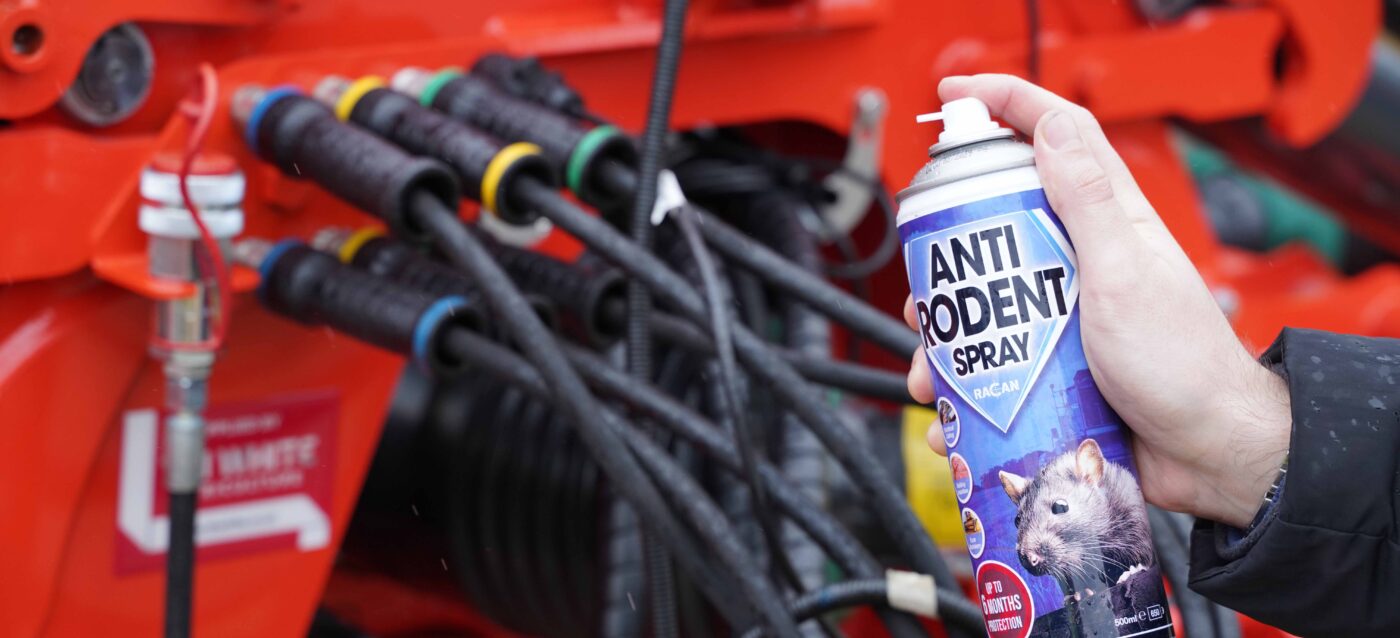
Anti-rodent sprays can be useful to deter gnawing on wires and ducting, particularly around machinery
As new rodent control legislation comes into force, dairy farmers face significant changes to how they manage vermin on their farms. British Dairying finds out more.
Rodents pose multiple threats to dairy businesses, ranging from issues with hygiene and biosecurity to damage to infrastructure and machinery including milking parlours, tanks and silos.
Nearly every farm has had a problem with rodents at some point, but how you manage and control them is crucial, says Dave Reece, Technical Consultant at Lodi UK and professional pest controller. And recent changes to rodenticide legislation are set to impact how farmers can manage rodents.
“The beginning of this year brought changes to where certain baits can be used, and further legislation coming in 2026 will affect how all bait is purchased and used,” explains Dave. “It’s crucial for farmers to stay informed about these changes to ensure they remain compliant, while managing rodents effectively.”
Staying ahead of these regulatory updates will help farmers maintain both operational efficiency and environmental responsibility.
As of January 1, 2025, it is illegal to use second-generation anticoagulant rodenticides (SGARs) containing bromadiolone and difenacoum in open areas and hedgerows. “This is to protect wildlife, specifically barn owls,” says Dave. “Studies have shown that around 80% of barn owls have been found with SGARs residue in their systems.”
However, the new legislation means some farmers may have to reassess how they manage rodents in areas not connected to farm buildings, like hedgerows and open-sided straw sheds. “Rodenticides containing cholecalciferol – a non-anticoagulant that operates through calcification – are the recommended alternative for farmers to use in these areas.
“Cholecalciferol works differently from SGARs; after eating around 14g of bait, rodents begin to feel unwell, cease eating and retreat to a secluded spot to die. This significantly reduces the time for damage and disease to spread, with a much lower risk of secondary poisoning for wildlife.”
However, not all products containing cholecalciferol can be used in this way, and Dave stresses the importance of checking product labels. “There are various cholecalciferol products available, but Lodi’s Gems Harmonix Rodent Paste is currently the only one approved for use in open areas and burrows.”
He recommends placing the paste along known rodent pathways in hedgerows and burrows to ensure the bait is effective, while minimising risk to other wildlife. Alongside baiting, producers should keep a close eye on rodent activity; and put preventive measures in place.
Proofing, monitoring, and baiting as an integrated approach to pest management is best practice, says Dave. “Prevention and proofing include maintaining a tidy farm, sealing structural gaps, and removing unnecessary water sources,” he says.
“I’d also recommend applying anti-rodent sprays to deter gnawing on wires and ducting, especially around milking machinery and vehicles.”
Milking parlours are prime locations for rodents to seek shelter, as they provide access to feed, as well as hiding spots in ducting, control panels, rotaries, pulsation wires, and more.
Continuous monitoring of rodent infestations is important to identify any signs of pest activity before they get out of control. “Rodents can be identified through clear signs like freshly dug holes, tracks, footprints near water sources, and droppings,” Dave says. “Rats typically drink multiple times daily, making areas near water sources prime locations for spotting footprints.
“In grain stores, rat activity can leave tail swishes in grain, while mice tend to require direct sightings.”
Regularly walking and inspecting farm premises helps detect problems early, and when problems are identified, farmers should select a suitable bait for effective rodent control.
“Grain-like baits are ideal for rats and mice accustomed to eating grain,” he explains. “Blocks or paste baits are better suited for indoor use or varying weather conditions.”
Consulting pest control experts is essential for choosing a bait that not only aligns with your farm set-up but also complies with regulations.
“With changing regulations, it’s important to seek professional advice if you’re unsure about the most suitable bait for your needs.”