

At one week old calves are moved from individual housing to group pens, with up to six calves per group
A dairy farm in Lancashire has seen calf mortality rates drop and growth rates improve after introducing targeted management and a structured vaccination policy. British Dairying finds out more about this success.
Richard and Jenny Mason, who run Manor House Farm in Barton, near Preston, say things came to a head three years ago, calves up to 42 days old were reaching a 10% mortality rate.
“It was demoralising losing calves, so we started looking at what we could do,” explains Jenny. “Scours and pneumonia were the main problems, and it was impacting growth rates, which had fallen to just 0.2kg/day.”
In 2022, they began working with their vet, Andy Bramall from Oakhill Vets. He quickly identified calf housing as one of the biggest issues – an old wooden shed with poor lighting, inadequate ventilation, and hard-to-clean surfaces.
“We had always concentrated on the cows and realised we were treating the calves as second-class citizens,” says Jenny. In October 2023, they invested in new, purpose-built calf housing from the Calf Company.
Three key areas
The Masons focused on three key areas:
1. Colostrum management
2. Vaccination
3. Calf housing
“We knew it wasn’t going to be a quick fix, we had to look at all aspects to see the benefits, and that’s what we did,” says Jenny.
Testing revealed that cryptosporidiosis was one of the causes of scours, while bulk milk and blood tests identified salmonella as a cause of both pneumonia and scours.
 The couple have introduced strict biosecurity in the calf pens
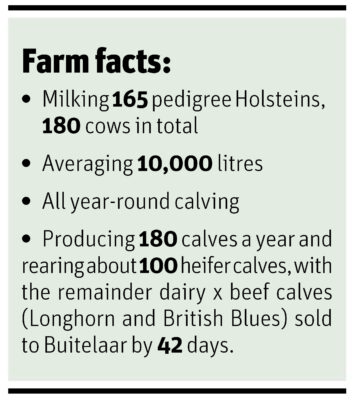
It wasn’t always easy for Jenny and Richard with just the two of them milking 165 cows, so to support the changes, they employed a dedicated calf rearer who helped them implement protocols.
They introduced a colostrum protocol, feeding calves as soon as they were born with good-quality colostrum measuring >25 on the Brix refractometer. If the reading was too low, they topped it up with colostrum powder. Calves now receive three litres of colostrum twice a day, with eight feeds of colostrum or transition milk provided over the first four days.
Milk feeding using a high-fat skim milk powder is increased to 3.5 litres twice daily at one week old when calves are moved from individual housing to group pens, with up to six calves per group. By two weeks old, they are fed up to four litres per feed, with weaning beginning gradually at seven weeks old, over a period of two weeks.
“We saw a huge difference once we started vaccinating.”
The couple have introduced strict biosecurity protocols in the calf pens. Individual pens are now thoroughly cleaned with a steam cleaner, instead of a pressure washer, and disinfected with a product approved for use against cryptosporidiosis before being left to rest for at least one week before being reused.
On the back of the test results, they started vaccinating for salmonella using Bovilis Bovivac. Jenny says the difference has been clear. “We saw a huge difference once we started vaccinating. We will always try something, and if it works, we stick with it – using this vaccine is something we have definitely seen work, with fewer cases of pneumonia and thriving calves.”
Last year, they noticed some calves developing mild respiratory symptoms despite no obvious changes in management. After conducting tests through the MSD Animal Health’s blood serology testing scheme, bovine coronavirus was identified. Andy recommended introducing Bovilis Nasalgen to help protect the herd.
“We noticed niggling respiratory symptoms, and when the tests showed it was coronavirus, we decided to try vaccination against this pathogen too and it made a huge difference,” says Jenny. “Not only was it causing a respiratory disease, but it was compromising calf immunity, making them more susceptible to other pathogens. Calves have continued to improve since using it.”
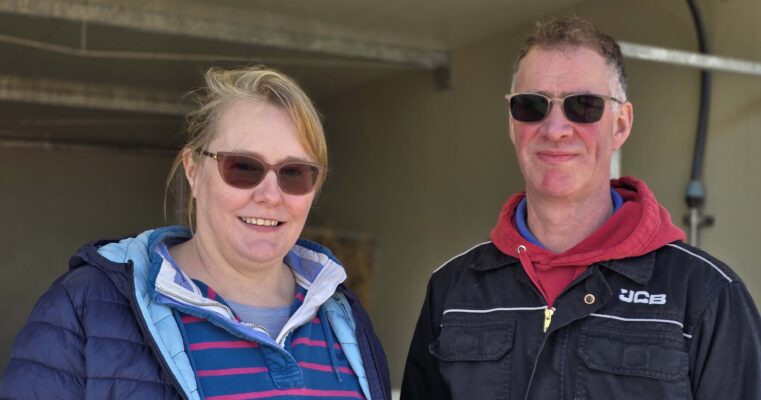 Jenny and Richard Mason run Manor House Farm in Barton, near Preston
The improvements in calf health have also reduced the staff’s workload. “We’re not having to administer medications or electrolytes nearly as often, which was taking up a lot of time when the problem was at its peak,” says Jenny. As a result of better calf health, the Masons have reduced their antibiotic use by 30% since 2022. “At its worst, we were constantly treating calves for scours; it was soul-destroying for Richard and Jenny,” says Andy. “The combination of the calf vaccination programme with improved management has really transformed things.”
The improvements have lowered calf mortality to just 1% – well below the industry average of 6% and the target of 3%. Early growth has increased from 0.2kg/day to 0.92kg (February 2025 average) allowing the Masons to reduce the herd’s first calving age from 28.5 months to 25.5 months.
“The reduction in calf mortality means we now have spare bulling heifers to sell, which provides an added income,” says Jenny. “We’ve also found that heifers are easier to get in calf and have a better conception rate as they’re stronger.”
“It’s freeing up space on the farm.”
The Masons supply bull calves, and any calves not kept for breeding, to the integrated beef supply chain company, Buitelaar. “Calves must weigh 55kg for Buitelaar, and that used to be a struggle to achieve by 42 days old. But now we’re hitting that weight comfortably by three weeks,” notes Jenny. “It’s freeing up space on the farm, reducing feed costs, and saving staff time.”
The Masons have signed up to Oakhill Vets Calf Club, where vet technician Samantha is responsible for weighing calves, performing routine procedures like disbudding and administering vaccines.
“This has made a huge difference; we don’t have to worry about whether things have been done because we know they have,” says Jenny. “At busy times, things could slip, but now we know the calves are getting what they need, when they need it.”
The changes have not only boosted calf health and farm efficiency but have also made the farm more sustainable. Reducing antibiotic use and improving calf survival rates have strengthened the business while creating new income opportunities.
“It’s been hard work, but the results speak for themselves,” adds Jenny. “We’ve seen massive improvements in calf health, growth rates, and overall farm efficiency. It’s been a game-changer.”
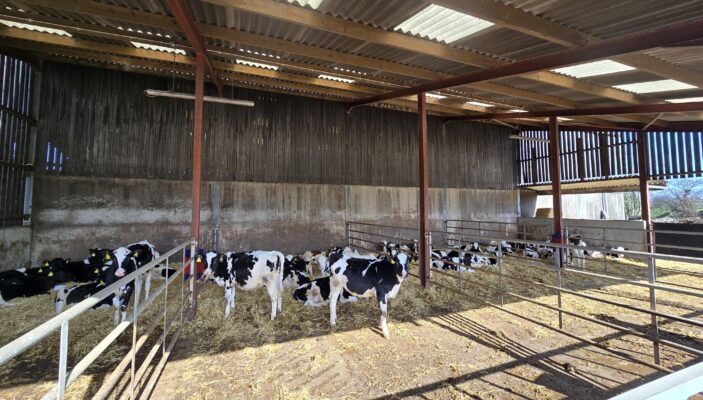 Calves are moved from individual housing to groups of up to six calves