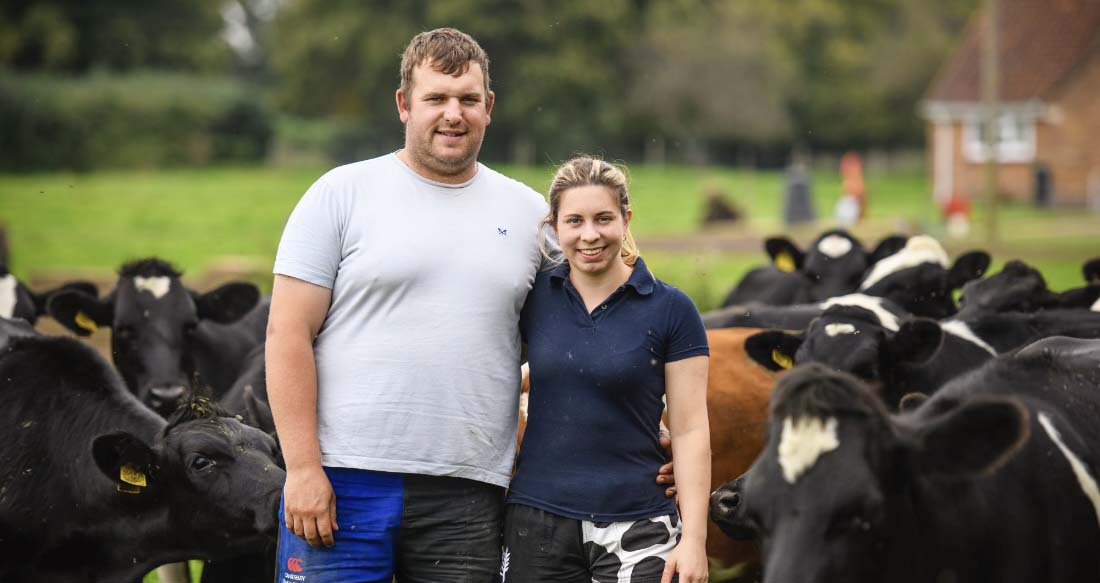
Josh Fincham and his wife wouldn’t have been able to take on a tenancy, so it’s been a perfect route for them
British Dairying is currently looking at ways to match new entrants with farmers who have no means of succession, following a successful industry round table at the House of Commons. Sarah Peacocke details one such partnership that’s working very well.
Share farming can be a straightforward way for young people to get a great start in dairying. And when you team up with a willing partner who wants to step back from the day-to-day running of a unit, it can end with a successful win-win partnership that suits both parties.
One perfect example of how such a relationship can benefit both sides is that between Guy Trehane (who offers the Trehane Nuffield Scholarship each year) and aspiring dairy farmer Josh Fincham.
“It’s crucial that the farm owner is really prepared to change.”
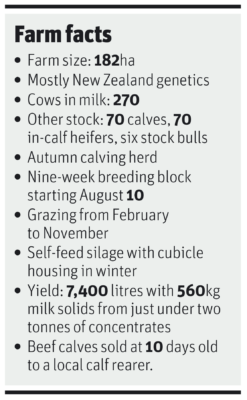
Some 10 years ago, Guy decided he needed to come up with a way to keep his farm in the family and, while in his 60s, take the opportunity to step back from the daily running of his 182-ha Hampreston Manor Farm near Wimborne, Dorset.
Guy has four children, but none wanted to follow their father into the farming business. However, his grandchildren love coming down to Dorset for a stay, and seeing the cows with farmer Josh.
Share farming is a hugely successful way for young people to get into farming in New Zealand; something Guy was keen to research. He was lucky enough to win a Nuffield scholarship himself and found a number of scholars had looked into the subject. “I read all the reports assiduously and worked out what had to happen to make it work,” Guy says. “The key was that it had to be a two-way thing.
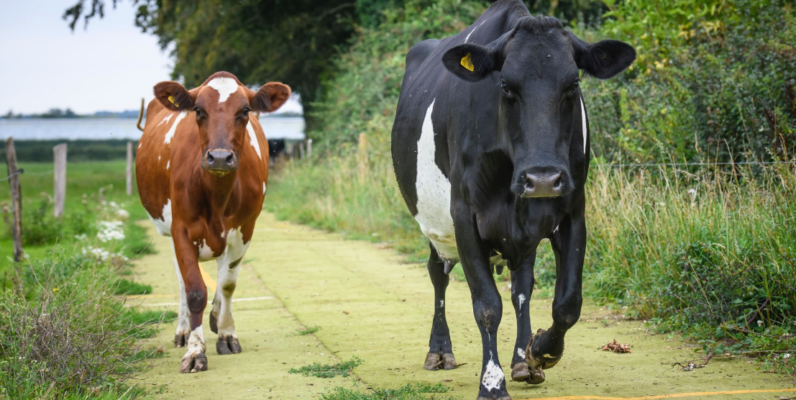 Guy swapped Holsteins for crossbreds to focus on sustainability
“The personal chemistry has to be right. There has to be a good relationship between the two parties. It took me three years to find my initial partner; Josh followed him and has been working with me for five years, recently signing a new contract for another five.
“It’s also crucial that the farm owner is really prepared to change. As an industry, we all tend to get a bit stuck in our ways as we get older, but you have to be prepared to grasp change, and the challenge is finding a partner that can make that change work. I interviewed four or five people, and I could just see that things wouldn’t work with them. But I’ve been extremely lucky with Josh – we haven’t had a cross word with each other, ever.”
Guy recommends that, if you see a point of conflict coming, you must discuss it. But you mustn’t make it personal, and ensure that any decision is purely based on business. “I think some people – later in age – who’ve been farming most of their life, find it hard to change,” he says. “I was very fortunate in my Nuffield to be exposed to all sorts of change. There’s nothing that’s happened on this farm since 1989 that hasn’t been affected by that scholarship.”
Sustainable system
Hampreston Manor Farm had carried a closed herd of Holsteins since 1913, and in over 100 years, they hadn’t bought a cow – something fundamentally unique. But Guy wasn’t happy with the sustainability of what he was doing and wanted to change to a system that was more environmentally friendly with better welfare standards. “So I flogged off my herd of Ferraris, went to Ireland and bought twice as many Skodas,” he quips. “And I haven’t looked back since.”
Now the herd comprises mostly Friesian and crossbred genetics, all under Josh’s watchful eye. “The great thing is that I’m really comfortable with the relationship. By giving Josh 80% of any profit made on an annual basis, he gets an opportunity to move his life upwards and forward. I owe the dairy industry a lot, and I feel I’m paying it back by giving a young chap an opportunity.”
So, how does this share farming partnership work?
- Guy and Josh each own 50% of
the livestock - Josh owns all the machinery
- Guy owns all the fixed assets on the farm – everything that’s bolted down, like buildings, water troughs, milking parlour and land
- Josh is in charge of the labour and all the contracting work that happens on the farm.
They have a joint bank account for the milk cheque to be paid into and where all costs are paid from – the concentrate feed bill, vets, seed and fertiliser and other inputs. Josh then gets paid a first charge to cover his labour, machinery and contracting, and Guy gets a first charge to cover the equivalent of his rent.
“This is a sort of halfway house between owning a farm and renting.”
There’s also a 10% return given to both parties for any money they’ve invested in the farm. “For example, Guy gets a 10% return on the parlour he installed and the sleeper tracks, I get a 10% return on my machinery – this covers any finance charge,” explains Josh.
At the end of the year (which runs from August 1 to July 31), any profit left in the bank once all bills have been paid is split, with 80% going to Josh and 20% to Guy. “For me this is a huge opportunity,” says Josh. “Obviously, I didn’t have the cash to own 50% of the herd initially, but from the annual profit, I’ve been able to invest wisely.
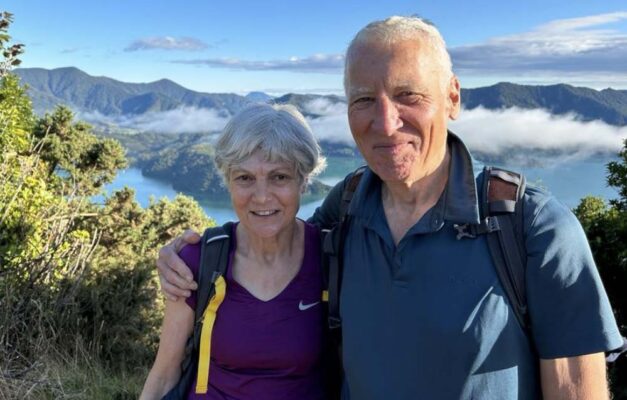 Guy Trehane’s family don’t want to farm, so he looked at other options
Growing gradually
“I borrowed £25,000 initially, which helped buy my machinery, and this arrangement has allowed me to gradually grow without taking on a lot of debt. “I think one of the things that stops young people from getting into farming is the huge financial requirement needed to get started, one that’s getting harder and harder to finance,” he adds. “I treat the farm as if it’s my own. Guy knows about every decision I make, and he knows it’s always made with the best interests of the farm at heart.
“This is probably a sort of halfway house between owning a farm and renting. We didn’t have any business history or background – I’m a builder’s son from Poole,” says Josh. “My wife doesn’t have a farming background, so I don’t believe we would have got a look-in for a tenancy.” But it’s a partnership which has paid off for both parties. “Honestly, I couldn’t be happier,” says Josh. “This works very well for us all, and I would certainly encourage more older farmers to consider this as an option, and for more young people who want to get into the industry to look for opportunities. There certainly aren’t many around – although there should be more – so anyone who tries to put partners together should be applauded.”