
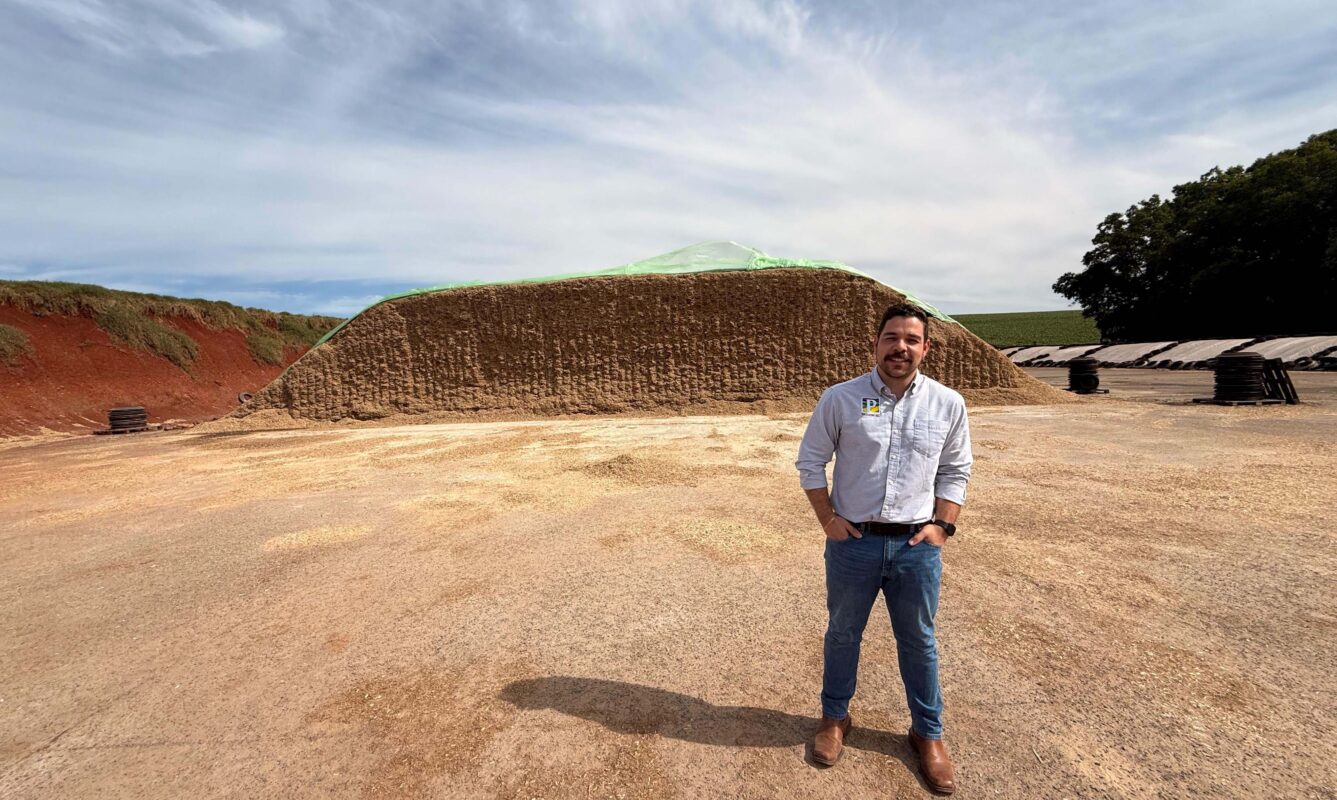
Silage is worth more than ever due to the increasing costs of production, says Felipe Amaro at Passion Ag
Global fuel prices are soaring, and the resulting higher cost of making silage could easily tempt farmers to cut corners. So how can producers reduce fuel use while still protecting fermentation, feed value and silage quality? British Dairying finds out.
Conflicts in the Middle East have shaken global energy markets, tightening oil supply and increasing pressure on fuel prices worldwide. That is now feeding directly into farm costs, with rising fuel and fertiliser prices set to make every stage of silage production more expensive this year.
Fuel costs typically account for 8-12% of the total cost of silage production, and with diesel costs rising by around 20-35% across Europe, that could mean roughly a 4% increase in the total production cost of silage. For livestock farms, that means every field pass, every trailer load and every hour spent packing silage matters more, says Felipe Amaro, Global Research and Development Manager at Passion Ag. “It also means that once silage is in storage, it is worth more than ever because more expensive fuel, fertiliser, labour and machinery have already gone into producing it.”
“A badly organised or poorly set-up harvest chain wastes diesel fast.”
Silage making is one of the most machinery-intensive jobs on many farms. Fuel is used in growing, mowing, conditioning, tedding, raking, harvesting, hauling, packing and sealing. In practice, the biggest fuel demand is usually in the harvest-and-haulage phase, but savings can often be made earlier in the process by reducing unnecessary machinery work.
So where can farmers make sensible savings, with limited negative effect on silage quality?
1.Reduce field passes
One of the most practical opportunities to save fuel is to avoid repeated machinery passes that add cost without adding value. “Every extra trip with a tedder, rake or merger costs diesel, time and labour,” explains Felipe. “The key is not to under-manage the crop, but to be disciplined: If the forage is drying well and pickup will be clean, repeated handling may add cost without adding value. Excessive handling during wilting can also increase crop losses in the field and reduce nutritive value.”
Every pass should have a purpose. Better planning of the mowing date, swath width and harvest sequence can often remove one operation altogether. “That is one of the easiest fuel savings to make without harming fermentation or feed value.”
2.Improve efficiency
The heaviest fuel demand during silage making is usually found in the machinery chain from pickup to storage. This includes the harvester or loading machine, trailer haulage, and the tractors or loaders used to spread and compact forage.
“That is why the biggest fuel savings often come from improving efficiency across the whole harvesting system, rather than from one single machine choice,” he explains. In practical terms, that means keeping trailers matched to harvester output, avoiding bottlenecks where forage is being packed, reducing idle time, and minimising unproductive road travel where possible.
“It also means making sure tractors and machines are set up properly. Tyre pressures, ballast, field speed, knife sharpness, chop setup, trailer matching and engine loading all affect fuel efficiency. A badly organised or poorly set-up harvest chain wastes diesel fast, especially when high-horsepower machines are left waiting or working
harder than necessary.”
This is one of the best areas to improve because it often has little or no downside for silage quality, adds Felipe. “Correct setup and smoother logistics can reduce fuel use while also helping the crop move more efficiently from field to storage.”
3.Protect the silage properly
This may not seem like a fuel-saving measure at first, but in a high-priced year it absolutely is. Once the crop has been grown, mown, harvested, hauled and packed, a large amount of cost has already been invested in every tonne in storage. “If that silage is then lost to poor consolidation, oxygen ingress, secondary heating or visible spoilage, the farm has not just wasted forage, it has wasted a product that was more expensive to produce in the first place,” he notes. That is why protecting stored silage belongs firmly in the top three. Good consolidation, rapid sealing, effective oxygen exclusion using a high-performance oxygen barrier, and prompt repair of any damage all help protect the value already invested in the crop. “In a year when fuel and fertiliser costs are elevated, silage losses become even more expensive. Saving a few litres in the field is worthwhile; saving tonnes of silage from spoilage is often worth far more.”
If fuel is expensive, silage is even more expensive, says Felipe. And when fertiliser costs are also high, every tonne of preserved forage becomes more valuable still.
“The most effective farms will not only ask how to use fewer litres per acre, but how to turn every litre used into more usable feed. Done well, those steps can lower fuel use while preserving what matters most – silage quality and feed value.”