
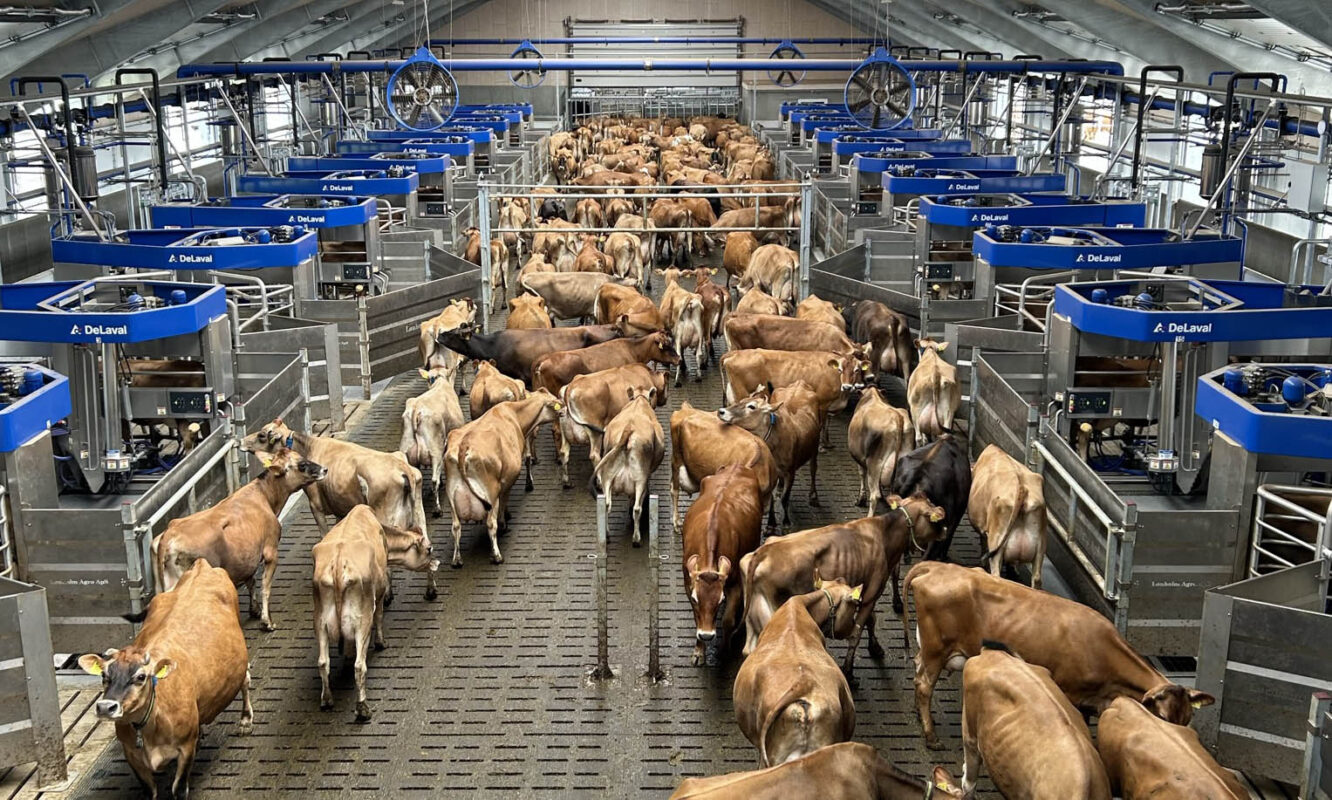
Batch robotic milking systems are becoming attractive for larger herds
Robotic milking has come a long way in the UK over the past three decades. It has moved from niche technology for early adopters to an option many dairy businesses now consider when investing in milking infrastructure. British Dairying finds out more.
The UK’s robotic milking journey began in Dumfriesshire, Scotland, in 1997, when the first robot was installed. “It was a Lely A2, and at that time Lely was the only player in the market,” says Gareth Jones at Robotic Milking Systems. “It was territory for pioneers and early adopters.”
A small number of installations followed in the late 1990s, before Fullwood entered the market around 2000 with its Merlin robot – built under licence to Lely using a combination of Lely technology and Fullwood operating software.
“We can assume that some 1,350 farms are now using robots.”
But while there was interest in the technology, there were a number of challenges. “The industry was desperate to expand, but it was being held back by reliability issues and dealerships being understandably unwilling to invest in expensive stock,” says Gareth. Supporting robotic milking systems was also a much bigger commitment than conventional parlours, and required a minimum of two fully trained robot engineers.
During the 2000s, DeLaval and GEA also entered the UK robotic milking market. However, uptake remained cautious, with farmers still unsure whether robotics was the right route for their business. “This was partly due to the high running costs at the time – and there was also an abundance of eastern European labour available to milk cows conventionally on larger units,” he adds.
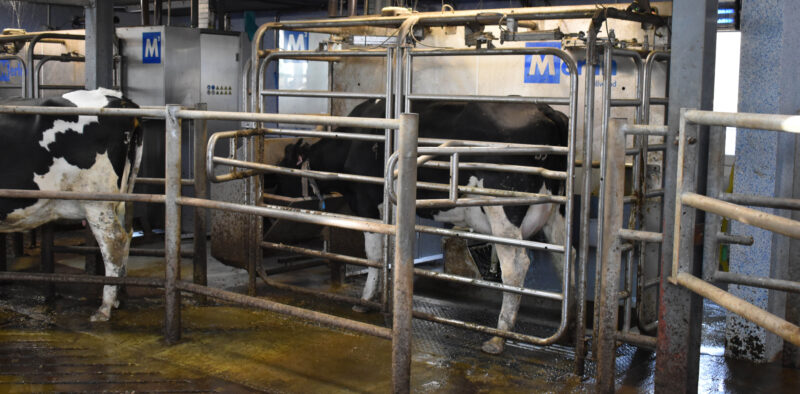 It’s estimated that 13.5% of UK farms are using a robotic milking system
By 2010, around 200 of the UK’s 10,000 dairy herds were estimated to be using milking robots from four manufacturers. Gareth believes robotic milking then became more widely accepted as a viable option when considering replacing a conventional parlour.
Growth continued during the first half of the decade, when around 5% of UK herds were being milked by some 1,000 robots. “This was driven by more dealers embracing the technology,” he explains. “They could see it having an impact on their conventional sales, which, in turn, led to better coverage in many areas of the UK. Boumatic also entered the market at around this time with its double box robot.”
By 2020, the market had gained further traction, with 2,000 robots milking 6.5% of UK herds. Gareth points to several factors behind this, including increased labour challenges, lower running costs as technology improved, and a stronger service network around the country.
Rising trend
In the past five years that figure has risen to around 4,000 machines in operation from the five manufacturers supplying equipment in this market. “With an average herd utilising three machines, we can assume that some 1,350 farms are now using robots to milk their cows – which is 13.5% of the farms in the UK.”
Looking ahead, he expects the trend to continue – although adoption will be shaped by farm economics, labour availability, and the needs of individual businesses.
Batch robotic milking is a system that Gareth believes is becoming more attractive to larger herds. Traditionally, many of these units have used conventional parlours, but some are now looking at robotics as a way to automate the milking process while still managing cows in groups.
“This is exactly the same principle as conventional milking, bringing groups of cows to be milked into a collecting yard, except here they are milked automatically, through a bank of robots,” says Gareth. The labour savings can be significant with these systems, as it only requires one person to bring groups of cows to the robots as opposed to three or four operators to run a large rotary parlour.
European comparisons
“Batch milking is already in existence in Denmark, Germany and Greece, so it is only a matter of time before we see it gaining traction with larger herds here in the UK.” However, uptake varies considerably between countries, depending on herd size, milk price, farming intensity, and labour availability and cost.
“Taking all of the above points into consideration, it seems reasonable to assume that there will be 2,000 farms using robotics by 2030, which would be around 20% of UK herds,” says Gareth. As herd size grows, the number of robots may increase to average four per farm, equating to 8,000 robots in action across
the UK.
And while 20% adoption would represent significant growth for the UK, this still lags behind some other European markets, like the Netherlands, where a much higher proportion of cows are in robotic milking systems. “For the UK, I don’t see it as a question of mindset. It comes down to economics, labour, and whether the system fits the farm.”
 Gareth predicts continued growth