Regular analysis of grass silage will be crucial to formulating winter diets
Producers wishing to make the most of forage stocks this winter will need to ensure they are planning, monitoring and paying attention to detail, as British Dairying discovers.
As plans for winter feeding begin to be formulated against a backdrop of continued milk price and feed price pressures, the opportunity to produce more from forage will be welcomed.
Stocks could be an issue in many parts of the country. The extensive and extreme drought means that farmers are already making inroads into initial cuts while late grazing and subsequent cuts are likely to be reduced. Maize crops in much of the country are on track to be harvested early, with many
expecting poor yields.
“Regular analysis of individual clamps will be vital.”
However, and encouragingly, initial analysis of second cut grass silages by Trouw Nutrition GB confirms that dairy farmers should be more optimistic about increasing potential production from forage this coming winter.
With over 2,200 first and second cut samples now processed through the company’s laboratory in Ashbourne, farmers can have confidence in the robustness of the data. “To exploit the full potential of forages it will be vital to have a full and accurate picture of the forages on farm when formulating rations,” says Isabelle England, Ruminant Nutritionist at Trouw. “For example, this might allow protein supplementation to be reduced, saving on one of the most expensive ingredient categories in dairy diets.
 Isabelle England from Trouw
“While average results can be a guide and give a general picture, the initial averages indicate that silages could feed well this winter,” she adds. “Weather conditions this summer mean that we are seeing regional variances, and of course some maize and subsequent grass cuts still have to be made, with both yield and quality influenced by the hot, dry weather in many parts of the country. But initial indicators are encouraging.”
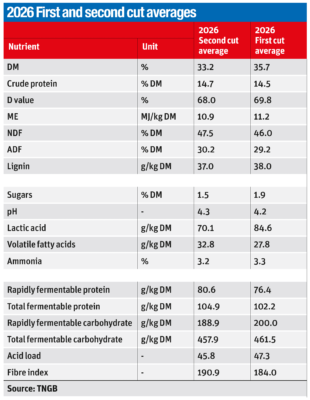
First cuts are generally showing encouraging nutrition characteristics with higher dry matter, metabolisable energy (ME) and crude protein levels. Rapidly fermentable carbohydrates (RFCs) are higher, indicating a greater supply of readily available rumen energy, which may support microbial protein production and milk from forage potential.
Fibre reduction
Neutral detergent fibre (NDF) levels have decreased slightly, likely driven by earlier cutting dates. The reduction in fibre should help support higher intakes and higher forage inclusion rates, provided stocks are sufficient and overall ration structure is considered.
“Overall, this year’s first cuts, on average, appear nutritionally better than in recent years, which will be encouraging for diet formulation,” says Isabelle. “However, as there is tremendous variation in samples, regular analysis of individual clamps will be vital.”
The results for second cuts reflect the challenging season, with growing and harvesting conditions varying considerably across the UK. In some parts of the country the dry conditions restricted growth and encouraged producers to delay harvest to build yield. In other areas, wet conditions at harvest affected wilting times.
“We are seeing a wide range in dry matters in second cuts, which will have practical consequences,” notes Isabelle. “At the wetter end of the range there may be a greater risk of effluent, more extensive fermentation and reduced dry matter intake, with some samples as low as 16% dry matter. At the drier end, where crops have been as high as 60% dry matter, the issue will be the effectiveness of consolidation. Poor clamp filling and consolidation can lead to an increased risk of heating and aerobic spoilage, so care at feed-out will
be essential.”
Energy reduction
Second cut dry matters are averaging 33.2%, below the first cut average of 35.7%. Despite a small increase in NDF, digestibility remains relatively good and ME is averaging 10.9MJ/kg dry matter (DM). As both digestibility and ME content are lower than average first cuts, moving from first to second cut may reduce overall energy density in the ration unless other ingredients are adjusted to compensate.
“Looking at how second cuts will ferment in the rumen, RFCs are slightly lower. However, total fermentable carbohydrates remain reasonably strong, meaning overall second cuts will provide a good base within the ration, which will be welcomed,” explains Isabelle. “Increased fibre index and a reduced acid load indicate a slightly slower and potentially more stable rumen fermentation profile.”
Second cuts on average will provide a slightly greater supply of fermentable protein relative to fermentable carbohydrate. This means the amount and degradability of protein in compounds and blends needs careful review, she adds.
Adding more rumen-degradable protein sources like rapeseed meal or distillers’ grain may be unnecessary in some rations, as this will increase feed costs without improving performance. It may be necessary to include sources supplying a greater proportion of bypass protein like heat-treated/protected soya. The key step will be to closely monitor the whole ration protein supply and balance accordingly.
“The message here is to be proactive.”
“Overall, attention to the fine detail will be essential to ensure silages deliver on their potential this winter,” continues Isabelle. “Nutritionists will need to review the balance of starch, sugars, fibre and protein in the whole ration rather than assuming that first and second cuts are interchangeable, if production from forage is to be optimised. In particular, starch supply and fibre balance will need to be carefully assessed.”
Feeding a mix of first and second cuts could work well, combining the higher energy and RFC of the first cut with the slightly slower fermentation profile of second cuts. “However, it will be essential to review diets as the proportions of different cuts in the diet change and quality varies as you move through the clamps.”
Clamps should ideally be analysed every four to six weeks, or whenever there is a noticeable change in the clamp face or an unexpected change in cow performance. This will ensure the ration reflects the quality of silages actually being fed. As well as ensuring the diet is balanced, it will also help ensure stocks
are closely managed.
This will be even more important when a wider choice of silages is available, including later grass cuts, wholecrop and maize. Dry matters should be checked more frequently, and intakes should
be monitored closely.
“Reducing waste must be a high priority on all farms this winter to allow forage stocks to contribute as much as possible,” says Isabelle. “Keep the clamp faces tight and only open as much of the face as required. Ensure block cutter knives are sharp and keep the area around the clamp face as clean as possible, removing any spoilt material.
“Where high dry matter forages are being fed, clamp face management, feed-out rate and ration stability will be crucial to reduce the risk of spoilage affecting intakes and performance,” she adds. “Monitor the clamp face and look for signs of heating, and check the troughs for signs of feed refusals. Products like Selko TMR can help reduce heating in the trough to limit feed wastage.”
This is a blend of buffered organic acids and acid salts optimised to create a hostile environment for micro-organisms, effectively reducing their growth and activity in the ration. This results in less heating, improving palatability of the ration and reduced losses of dry matter and nutrient value, explains Isabelle.
“Mycotoxins may also be of increased potential risk, and the message here is to be proactive. Where there are signs of mould, heating, and unexplained reductions in intake and performance, the forage should be investigated and an appropriate, targeted mycotoxin risk management strategy should be considered, which may include a binder.
“The Toxo range of mycotoxin binders bind and work to eliminate mycotoxins while strengthening the intestinal barrier and moderating the immune response. Together these work towards mitigating the effects on animal performance caused by exposure to mycotoxins.”
Trouw’s national averages, based on a significant number of samples, indicate that on farms with sufficient stocks and well-preserved silages, there could well be the opportunity to increase the contribution from forage. This will help to reduce purchased feed costs this winter and help support margins, says Isabelle. “But the skill will be in understanding the forage available on the farm, monitoring performance and reacting as the season unfolds to maximise the opportunity.”