
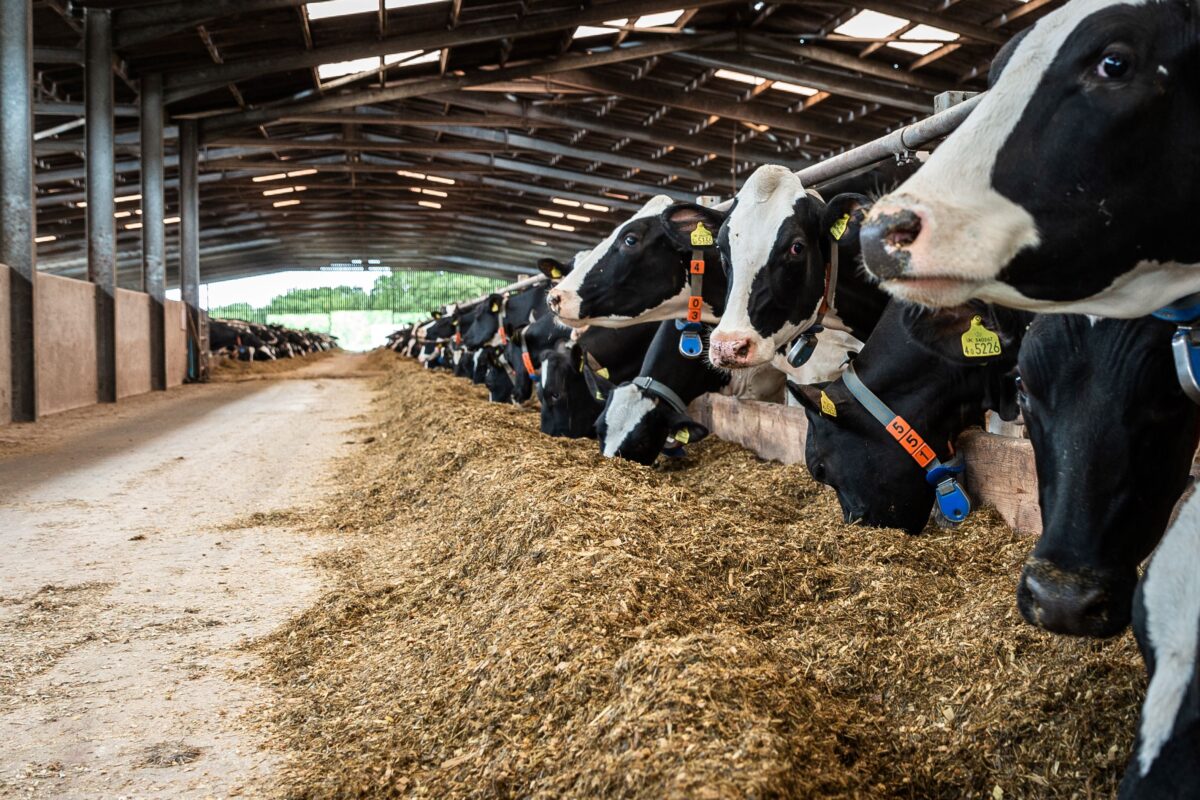
The challenge from endotoxins is ever-present, and detrimental impacts range from lameness to sudden death
An ever-present toxin challenge, which can compromise herd health and performance, may be leading to avoidable and potentially costly challenges to cows’ immune systems. British Dairying finds out the considerations when it comes to toxins.
The threat that mycotoxins pose to the health and performance of herds is well-known, and producers are usually aware of the telltale signs in feed and forage. But endotoxins, which are less commonly discussed, could be causing hidden damage.
Endotoxins, often referred to as lipopolysaccharides (LPS), are found in the cell walls of gram-negative bacteria, says Angharad Loveluck, Technical Services Manager at Trident MicroNutri. While contained in the bacterial cell, they cause no damage to animal health. However, upon bacterial death, LPS are released and pass into the bloodstream, where they can induce an inflammatory response.
“Fuelling the cow’s immune system is energy expensive, at around 1kg of glucose for every 12 hours of immuno-stimulation, but can also result in numerous health issues,” explains Angharad. “While symptoms of endotoxin challenges can be seemingly unharmful, like increased urination, they can be much more serious, for example death through sudden shock.”
Detrimental impacts
There is also evidence that LPS circulating in the blood can:
- Affect the lamina between the bones in the hoof, leading to an increase in lameness.
- Increase somatic cell counts (SCC), indicating a mammary gland infection.
- Reduce general cow health and performance, as more energy is diverted from weight gain or milk production towards the immune response.
The challenge from endotoxins is ever-present, with cows coming into contact with the bacteria that contain them via feed, the air and the environment.
“In healthy herds, only small quantities are absorbed through the intestine into the blood, where they are then transported and detoxified in the liver,” says Angharad. “It is in herds that are experiencing levels of stress in the rumen and lower gastro-intestinal tract, where the number of gram-negative bacteria transported in the bloodstream can be amplified,” she adds.
Sub-optimal rumen conditions can be the first domino in the chain of events leading to increased LPS in the bloodstream:
- High starch diets causing rumen pH to fall to sub-acute ruminal acidosis (SARA) risk levels (below pH 5.5).
- This reduces numbers of fibre-digesting bacteria and promotes starch digestors and lactic acid production, increasing rumen acidity further.
- The highly acidic environment can kill gram-negative micro-organisms, which then release endotoxins into the rumen.
- Falls in ruminal pH can also lead to increased rumen wall permeability, allowing high concentrations of endotoxins to enter the blood.
- More endotoxins in the blood equates to more pressure on the liver to detoxify them, and the liver can become overwhelmed.
- This can lead to laminitis, commonly associated with ruminal acidosis.
- Some types of antibiotics kill gram-negative bacteria, which may increase endotoxin release in the rumen. Therefore, it is important to assess the risks which, beyond diet, may promote endotoxemia in the herd.
“Don’t waste energy inputs on unnecessary challenges to your herd’s immune system.”
The first line of defence against endotoxins is good ruminal health, notes Angharad. “Buffering and conditioning the rumen to stabilise rumen pH above SARA risk zones, and promoting fibre-digesting bacteria using a long-lasting rumen buffer or a live yeast, is vital in reducing gram-negative bacteria deaths, and lowering endotoxin release,” she says.
“If endotoxin risk increases, or there are unavoidable diet changes or potential stressor increases, then add a toxin remediator like Ultrasorb R to the diet, to bind these toxins and reduce their damage potential.”
Effectiveness
To increase effectiveness against endotoxin challenge, the ingredients in this have been reassessed, with the new formulation tested to assess its capability to bind and degrade some of the most commonly produced endotoxins. This has also improved its performance against ZON, a commonly seen mycotoxin in feed.
“Don’t waste energy inputs this winter on unnecessary challenges to your herd’s immune system,” adds Angharad. “With the milk to feed price ratio currently sitting at a low of 1:2, every megajoule counts. Support the herd against the challenge of mycotoxins and endotoxins, and keep energy in the system while maintaining herd health and productivity.”