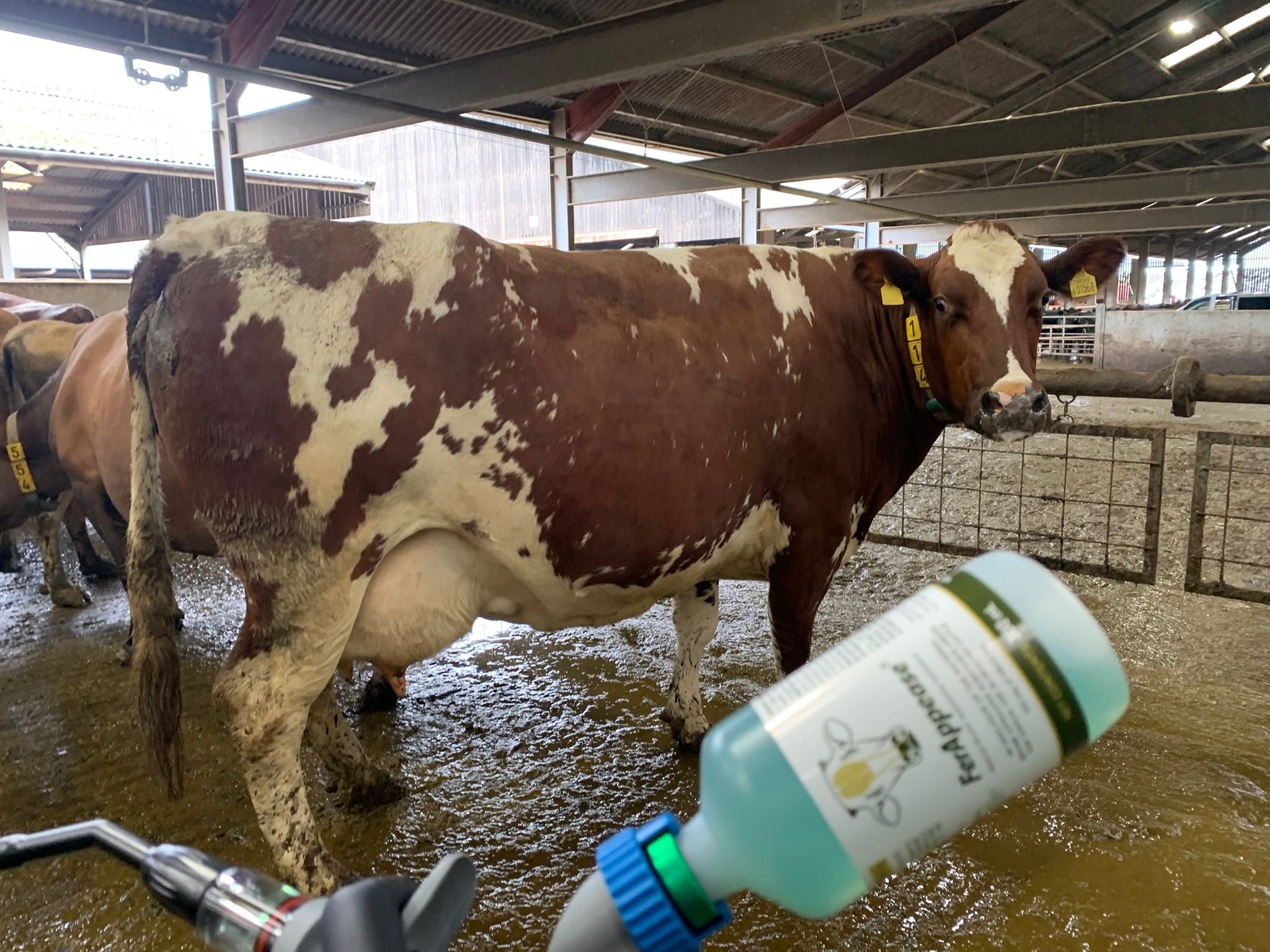


The trial, covering 375 Holsteins on two dairy farms in Argentina, saw the cows synchronised and inseminated at 65 days in-milk. The treated group received FerAppease – a maternal bovine pheromone – at insemination, while the control group received a mineral oil. Their pregnancy status was measured at 32 days – and the treated group averaged a conception rate of 60.2% against the control at just 47.7%.
“To jump to that kind of level is crazy,” says Rob Drysdale, Technical Vet at Fera. “Anecdotally, we had good results in synchronised heifers here in the UK, with an 8-10% increase in some groups, and now it’s been proven in peer-reviewed research.” Cornell University is now looking to replicate the research
across more than 5,000 animals.
The pheromone reduces production of the stress hormone, cortisol, and has already shown benefits at weaning and other stressful events. “Synchronising and inseminating cows incurs a lot of stress,” says Rob. “This could be affecting fertility a lot more than we realised.”
At a cost of £3.50/application, the return on investment is 833%, he claims. “If you’re using expensive semen or trying to keep your calving interval tight, then if you can get one in 10 extra animals pregnant it’s worth it. One cow’s milk is worth £60-70 over a month – and it could be the difference between culling or not.”
The spot-on pheromone effect lasts for 14 days, so it makes sense to treat at the onset of synchronisation, to cover the whole handling period.