
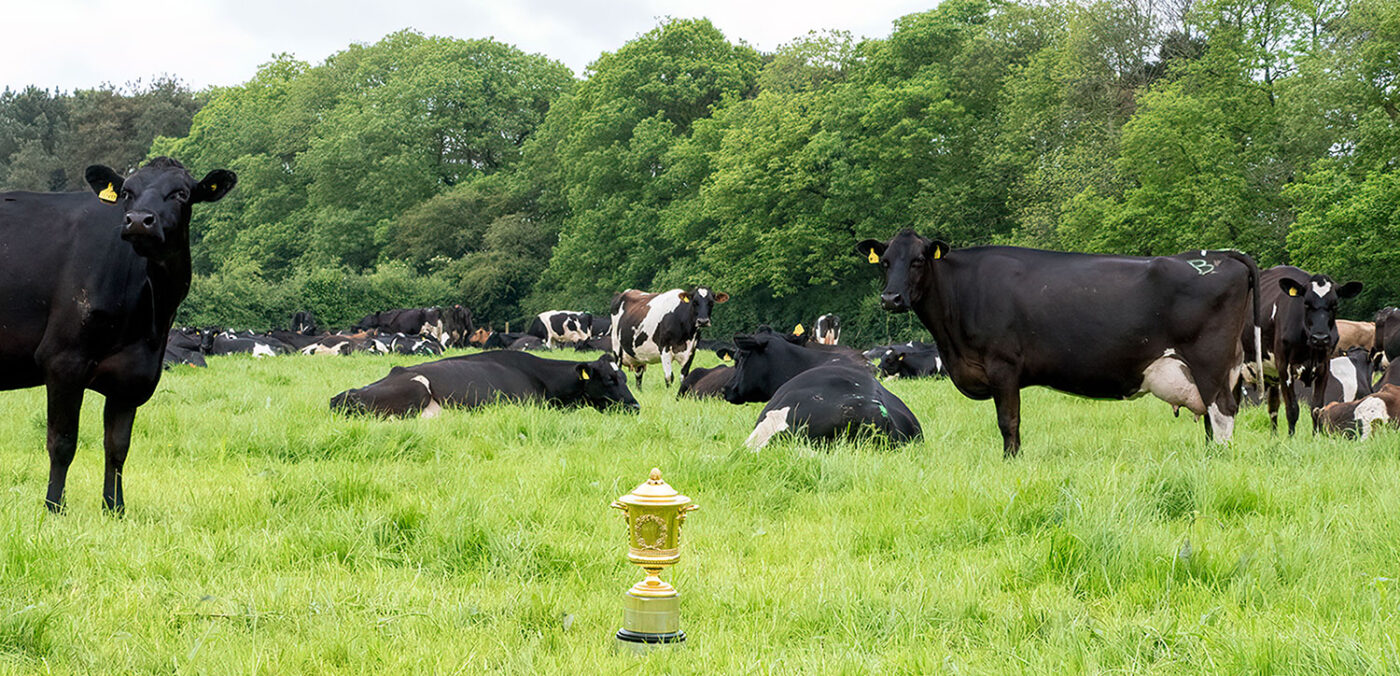
As George Brown pens his final NMR / RADBF Gold Cup column of the year, he reflects on what the past 12 months have brought to Bisterne Farms, and looks at the year ahead.
The final one! I will thinly mask my celebration, as writing these columns has been both a blessing and a curse. In our deliberately boring dairy system, things rarely change quickly enough to provide fresh, monthly content, which hasn’t always made it especially easy.
However, it has been fantastic to share the baton with some of my colleagues, and extremely enjoyable for me to read their perspective on some of our activities throughout the year.
Has there been a better winter? So far, I’m not sure. It’s been dry, with occasional showers to keep the slats moving. Cool enough to keep the bugs at bay but not yet so cold that we’ve had to thaw water troughs for the out-wintered cattle. Top that off with a nice milk-to-feed price ratio and relatively full silage clamps, and I almost start to sound like I’m bragging.
To keep me grounded, as a team, we appear to have recently developed a quite remarkable knack of vandalising machinery. Our local Kutoba dealership has been on speed dial as we seem to go from one tractor being out of action to another. Not a reflection on the make of tractor I should add, but rather the make of drivers!
It’s been a tremendous 12 months really. We kicked off the year with successes in the Gold Cup competition, followed by other highlights that included signing the extension on our contract farming agreement, and welcoming our first child. Safe in the knowledge that neither my other half or our small baby will read this, I can avoid having to express an opinion on which brought me the most pleasure and instead can hide behind the fact that there were contrasting upsides to each.
If the next 12 months are even half as good, I’ll finish 2025 feeling pretty chuffed. We are looking at options to grow our existing farm business, either through expansion into another dairy or by developing a beef enterprise.
With various plans in the pipeline, it remains to be seen which, if any, will come to fruition, but regardless it’s enjoyable to speculate and dream. It feels like the right time for a progression project, with our dairy system relatively settled and an exceptional team in place. It would feel like a waste of their collective talents not to use the next 12 months to push forward.
New slurry store
Capital expenditure projects at home include the construction of a new slurry store. We have been fortunate to have made it through all the stages in applying for grant funding under the slurry investment scheme and will shortly be breaking ground on a new concrete tower. That, coupled with covering our existing storage, will provide us with six months of fully covered slurry storage and, we hope, will mark the end of our major investments in the dairy.
It would be nice to imagine that this will ensure we remain fully complaint in all areas for the next 20 years, but regulations evolve. The cost of compliance and capital expenditure required to meet ever-moving goalposts continues to be the big discussion area in dairying one that would be virtually impossible without the help of grant funding to make these projects happen.
Thankfully, the milk price has been on a positive trajectory while we have been writing these columns, so much so that there is currently a 9ppl increase in the February 2025 milk price relative to the same time last year. As we head into the spring flush, we wait with bated breath, but it feels like a good starting point and a welcome boost when embarking on big capital expenditure projects.
Speaking of the spring flush, we have been analysing our milk profile in greater detail. As a split calving herd, we see two peaks in our milk volumes; one from March to May and the other from September to November, both coinciding with peak numbers of cows in milk. Given that we calve 400 animals in the autumn and 220 in the spring, I had always believed our autumn peak would be much larger. But it’s interesting to note that there is only a 1% difference between the total milk volumes over each period. Among other things, this neatly demonstrates the ability of spring grass to ‘flush’ the yields of the autumn milking cows and evidences their much flatter lactation profiles.
Looking ahead, we have now purchased most of our feed for the coming winter. We have fully contracted our cake requirements until the end of November, with 14% dairy cake being fed through the summer contracted at £266/t, and 18% for winter at £297/t. Both prices are slightly lower than in 2024. Historically when buying feed, we have booked 50% of our volume for each month, which leaves us very much tied to the same company for the second 50%.
The thought this time was that we will have maintained the flexibility to switch supplier if required, and by December our autumn cows will (hopefully) be mostly back in-calf and past their peak milk yield. We can nonetheless sit comfortably in the knowledge that half of our winter feed requirements are covered.
First few calves
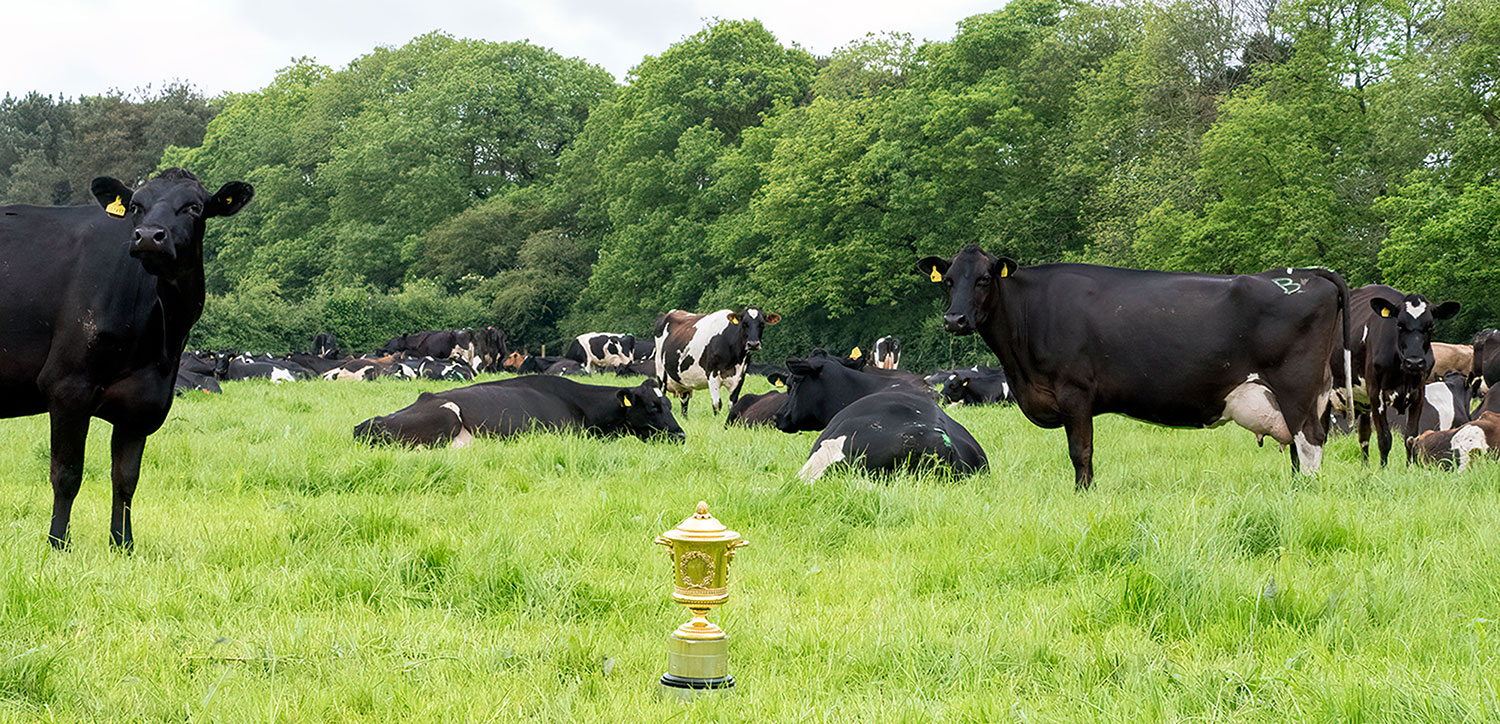
Back on the ground, the first few calves have now started to appear for the spring. Interestingly, having used sexed male beef semen at the start of the block last May, we haven’t seen the usual flurry of short-gestation dairy heifers arriving three weeks early, as we tend to in the autumn. Four days out from the official start date, we have calved just 3.5%, which has given us plenty of time to finalise preparations and finish polishing our calf pens.
It feels great to sign off with an air of optimism. I can only hope that when this year’s Gold Cup winner puts pen to paper for their final article in 12 months’ time, they feel just as positive about the road ahead.