
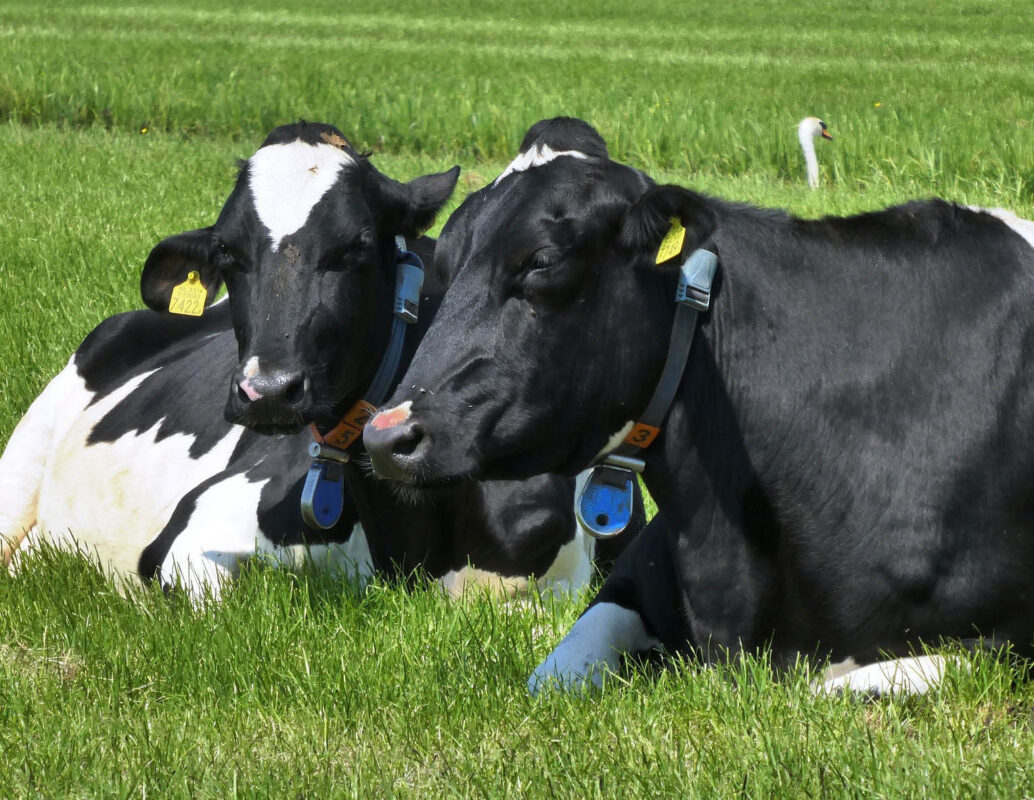
Cows mobilise muscle around calving, which then needs to be replaced
The dry period is a key phase in a cow’s life, and getting it right is critical for her future success. So how can precision nutrition help? British Dairying reports.
For a long time, the dry period was seen simply as a holding period between two lactations, during which the priority was mainly to avoid obvious mistakes – excessive energy intake, mineral imbalances or
post-calving diseases.
“Today, research and field observations reveal a very different reality,” explains Marie-Laure Ocaña at Zinpro. “The dry period is a phase of active programming, during which the cow prepares; both metabolically and physiologically, for the major challenges of lactation.”
“The mobilisation of body proteins begins before calving.”
The transition period – generally defined as the three weeks before and after calving – involves numerous changes within a very short timeframe.
The cow must simultaneously cope with a drop in dry matter intake, significant hormonal upheaval, the activation of her immune system and the onset of lactation.
“Conditions like hypocalcaemia, ketosis or inflammation are often addressed separately. Yet, biologically, they are deeply interconnected,” says Marie-Laure. “The aim of the transition is not only to prevent disease, but also to preserve key tissues to prepare for sustainable production in peak milk, as well as successful breeding to increase the herd’s functional longevity.
“Mobilisation of fat at the start of lactation is important, but the less visible mobilisation of body proteins and muscle is just as important. Muscle tissue provides essential amino acids to support milk production, the immune system and key metabolic pathways.”
Cows show considerable variability in muscle reserves at the start of the dry period. “Recent research clearly shows that cows with higher muscle mass at the start of the dry period produce more milk and give birth to heavier calves at the next calving. But the mobilisation of body proteins begins before calving, before fat mobilisation starts.”
Muscle replenishment
Muscle is therefore no longer considered a mere reserve tissue, but a key factor in metabolic resilience and for the success of the transition, regardless of body condition. Two cows with the same body condition score may have very different metabolic resilience depending on their muscle reserves.
“Unlike adipose tissue, muscle replenishment does not occur in early lactation but much later, in the second half of lactation,” notes Marie-Laure. “Excessive bodyweight loss around calving can therefore lead to a lasting deficit, which is sometimes never fully recovered before the next lactation.”
Given this complexity, everything implemented in terms of nutrition and non-nutritional factors during the dry-off phase should support one, or ideally all three, pillars of a successful transition period:
- Dry matter intake, which determines nutrient intake. It relies on energy-controlled rations, improved fibre digestibility, ruminal balance and optimal feeding management (distribution, bunk space and sorting) as well as herd management (disease)
- The liver – the true conductor of energy metabolism. The objective is to enhance gluconeogenesis and lessen chronic inflammation by reducing upsets (heat stress, social stress, being uncomfortable)
- Skeletal muscle, which ultimately determines metabolic resilience throughout the animal’s lifetime. Target muscular animals and reducing excessive loss after calving.
“Each of these levers supports different aspects of the
transition period.”
“The success of the transition depends on the co-ordination of these three systems, not on a single factor,” she explains.
“And precision nutrition enables us to move beyond a generic preventive approach and to target one, or ideally all, of these pillars.”
The nutritional toolkit currently available for cows in transition is extensive: Producers can use rumen-protected amino acids, rumen-protected vitamins, glucogenic precursors, performance trace elements, yeasts, phosphorus binders, anionic salts and isoacids.
“Each of these levers supports different aspects of the transition period, and the temptation to seek a ‘miracle solution’ is strong. However, the real question is not which tool is the best, but which tool supports which metabolic function (or which pillar), for which cows and at what stage.”
The future of transition nutrition is targeting precise nutrition and understanding the difference between a nutrient (necessary for metabolism) and an additive (used to optimise a function).
“Weight loss comes at a significant energy cost.”
“Rumen-protected amino acids, particularly methionine, strongly support liver function, immunity and the mammary gland,” says Marie-Laure.
“Their effectiveness is maximised when they are provided both before and after calving. Performance trace elements, for example chelates of metal and amino acid in a 1:1 ratio, play a central role in the inflammatory response and liver protection.
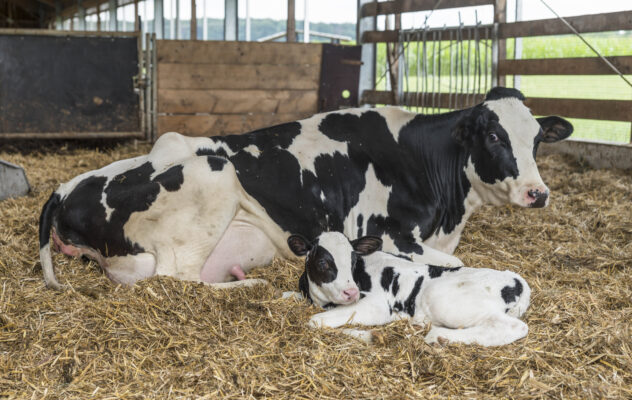 Cows that have an optimum dry and transition period perform better
Other tools like protected choline or niacin have more targeted effects. Research has shown that they are only useful in certain high-risk situations (for example, in over-conditioned cows or those at risk of ketosis), and for a certain period (they need to be fed before and after calving for maximum effect), which makes them less universally applicable.”
In this context, isoacids play a special role. By supporting rumen function, they contribute directly to the production of metabolisable protein and the digestibility of fibre, increasing nutrient availability during the transition period.
“More recently, there has been growing interest in their metabolic role in dry cows,” she notes.
“University trials and field data consistently show an increase in dry matter intake and blood glucose levels before and after calving, a reduction in non-esterified fatty acids (NEFAs) (a marker of fat mobilisation) and β-hydroxybutyrate (BHBs) (ketone bodies).
“There is also better maintenance of body weight after calving, and an increase in peak milk yield, even when supplementation is limited to the dry period.” Over the past 10 years, Zinpro has conducted research into the benefits of feeding isoacids to dairy cows to improve their health and performance.
“IsoFerm is a blend of isoacids that can be added directly to the ration or can be incorporated into a feed to ensure more consistent intake,” says Marie-Laure.
It is recommended to use it throughout the dry period, at a rate of 40g/head per day. For an investment of less than £17/cow for the whole dry period, the benefits include reduced weight loss (24% more retained) and a marked decrease in metabolic disorders at the start of lactation (50% lower risk of ketosis), which translates into an improved start to lactation (five to 10% higher milk yield at peak).
“Weight loss comes at a significant energy cost – if the cow loses less bodyweight at the start of lactation, she ‘saves’ this energy later because she can continue to allocate it to milk production rather than to regaining this weight (persistency),” she adds. “It is estimated that this represents between 100 and 150kg of additional milk, in addition to a better start to lactation.”