
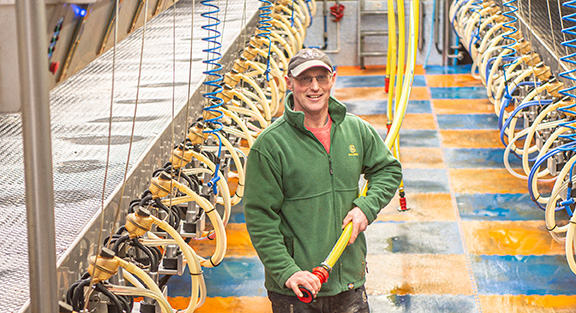
In this month’s RABDF/NMR Gold Cup Comment, Paul Broad of T N Morrow and Partners is making plans for the open day while focusing on silaging and breeding decisions.
Another month has flown by and preparations for the open day are progressing – hopefully we will be ready by 30 June.
The maize was drilled and rolled by the end of April, which is the earliest for several years. Seedbed preparation was in very dry conditions and rolling asap after drilling helped us to conserve as much moisture as we could. We have had some showers since to help it germinate, but I can’t see it making an appearance any time soon, as the air temperatures have been chilly to say the least.
Over the past two months, north westerly winds have made it feel colder than during the winter. I’ve only just taken off my vest, with the younger generation saying I’m old and past it. I tell them I might be old, but I’m not past it just yet!
Grass growth has improved with some rain, and second cut silage was taken five weeks after the first. It was wilted for 24 hours, and we had 12.5t/ha at 30% dry matter. Fertiliser and separated water have been spread, and with some more rain forecast, we are putting everything in place for the next cut.
The cows have been milking well, and to reduce the number of ‘B’ litres we decided to sell eight freshly calved heifers and second calvers. Considering the milk price, they sold very well to average £2,913 each. The buyers were all flying herds. We have what I call a commercial pedigree herd because we need to breed cattle with the capacity to eat plenty of forage, but that aren’t too tall. We also look for good sound udders and decent mobility to thrive in a large herd environment.
Bulling heifers
I was looking through our bulling heifers a while back with a semen rep, and heifers by two bulls stood out, being smaller but wider through the front end, having greater body capacity and carrying more body condition. So, I ordered more semen from this bull. His daughters are now calving in his country of origin, and breeders there must like the daughters as demand for his semen has gone through the roof. So has the price – it’s gone up 50%. We’ll have to wait and see if we made the right decision.
Nowadays, I mainly try to use proven bulls to produce a more consistent looking herd. Every bull has its weak points, but with a proof, I know what they are, so can try to breed them on the right cow. I still use genomic sires because we all want daughters by the next so-called hot bull, but over the years, I’ve found that the genomic bulls lack consistency. You seem to get six good daughters, six medium looking daughters and six that you wish you’d never seen.
With the cost of rearing heifers ever increasing, you can’t afford to breed heifers with poorer conformation. Commercial dairymen will soon tell you if they are any good with the price they are prepared to pay. It’s all in the eye of the beholder; you can’t just breed cows by numbers.
Self-locking yokes
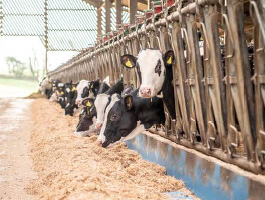
We have just had our six-monthly TB test and, thankfully, we were all clear – that’s one thing less to worry about for six months. We tested 952 cattle in five hours and even had time for breakfast; self-locking yokes really come into their own for this job, with only about 100 having to go through the crush. Not only do the yokes save time but they are a lot less stressful for the animals and us. They’re also significantly safer, as many people will have been kicked and pushed around when trying to get cows in a crush, particularly on the day of reading.
The calf igloos are situated in our old silage pit. With all the rain we had last winter, part of the concrete block retaining wall decided to fall down.
Daniel, our builder, is always busy like any good builder, but with a deadline of the end of June to get it fixed he has been prompt in tearing down the rest of the wall, putting new steel and concrete panels and laying new concrete on the access lane. That’s one benefit of having the open day – otherwise we could have been put on his ‘to do later’ list in six months’ time.
Water on a dairy farm is very important; you either have too much or not enough. We have two springs that feed the farm, with mains as a back up when it gets dry. We have the heifer sheds on mains and use both springs for the cows. We have purchased more 20,000-litre tanks to give us more capacity, so the cows don’t run short.
When we built the new dairy unit, we collected all the rainwater off the roofs into an underground tank, which then feeds into six storage tanks, with the water being used to wash down around the parlour. We have enough storage to last four weeks before we need rain again, which is a tremendous saving on the volume we use from our springs.
We have just done a cashflow forecast for the year ahead. Harry, our consultant, comes out and we talk about future plans. It all takes money, and whether we get 35ppl or 45ppl in the coming year will determine what we can do.
We listen to the people around us, but as a family, we always like making our own decisions. The person who never makes decisions will never get anything wrong. If you buy your dairy cow blend too dear one year, and it costs you a lot of money, you will try even harder next year to do a better job; the pressure’s on to make the right decision.