
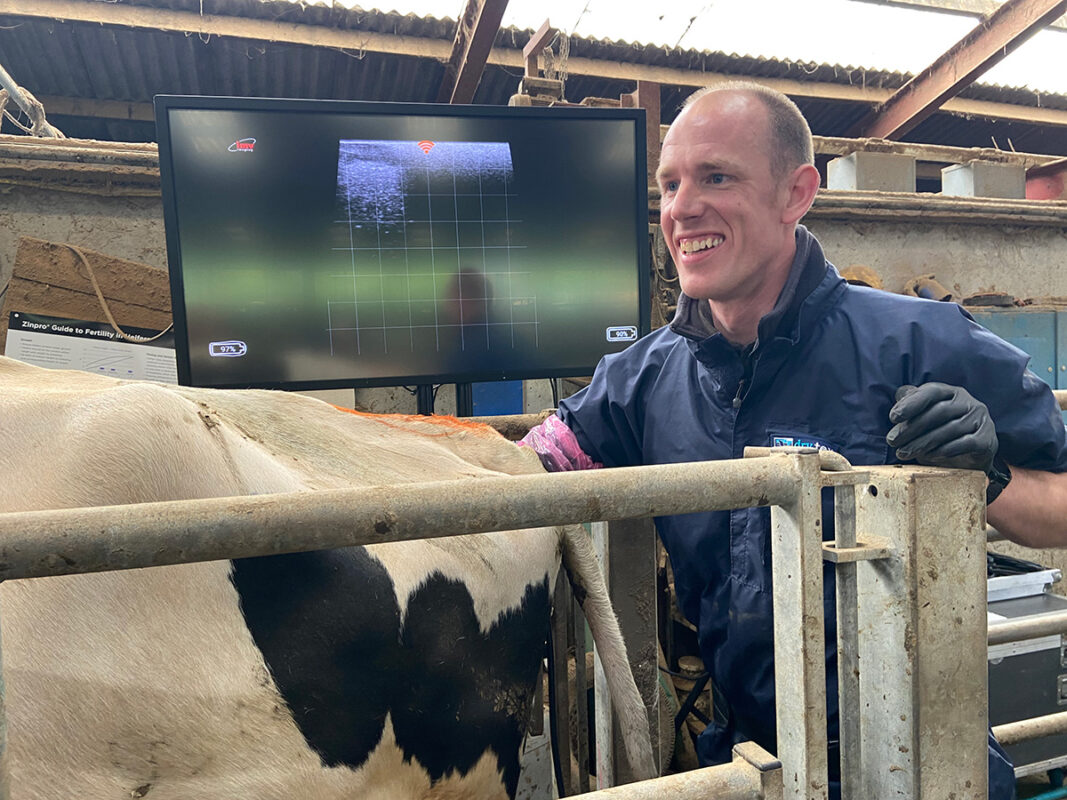
In this month’s NMR / RABDF Gold Cup column, Harper Adams Future Farm’s vet Dan Humphries from Horizon Dairy Vets takes centre stage to explain the farm’s approach to animal health and efficiencies, with a focus on individuals, not averages.
July and the Gold Cup open day seem like quite a long time ago now. But as part of the day Kate Robinson and I did a workshop about the journey the herd at Harper Adams has been on and how we’ve used some of the tools from lean management along the way.
A principle from manufacturing that we can apply to dairy farms is the need for standardisation – trying to make variables less variable. The benefits of consistency aren’t news to anyone, but when we dig a bit deeper into a herd situation, there are often plenty of areas where we could improve herd performance by allowing each cow an equal opportunity to perform.
Comparing cows
Looking into this in a bit more detail, it’s very common for us to compare cows by their milk production, but do we consider whether the cow that’s a bit behind has had the same chance to do the work we want her to do?
An example of this is when we look at the time out of the pen – a measure of the time a cow has spent away from feed and beds, which predominantly represents milking time.
For the first cow in a group, the time out of the pen could be minutes, enabling that cow to continue feeding and have a longer resting time, which results in more milk. The last cow in some herds, however, may return two hours later – and given milking order is often quite consistent, this might happen every milking. In a twice daily milked system, that’s up to four hours difference per day.
To me at least, it seems unfair to compare the first cow, who’s had four more hours access to the resources she needs, with the last cow, because that’s a constraint that we’ve put in the system and will obviously result in differences in production.
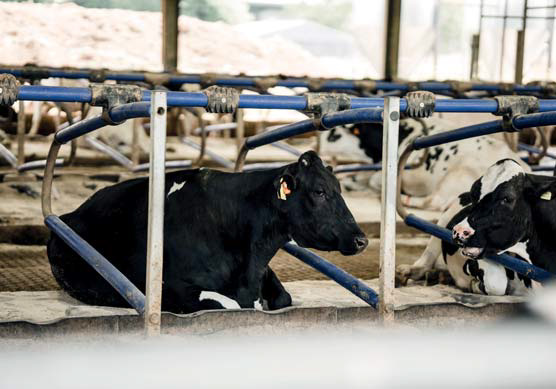
An extra hour of lying time can be worth more than one litre of milk in the tank… In circumstances like this, looking at group sizes for milking or how we collect cows can yield significant results and reduce the variation in milk production in a group.
That’s one example, but there are plenty of other things we can look at to ensure we give cows an equal opportunity. Obviously, the ration we feed (not forgetting the water too) contains the raw materials required for milk production.
If we were running a factory, one thing we’d be pretty quick to ensure is that every worker had reliable access to the raw materials they require to make the product, but so often on farms feed access is compromised by feed space, cow flow or design of the feed barrier.
A different ration
This, coupled with sorting or preference behaviour, can mean that the cows which are late to the trough can be eating a very different ration to what we think they’ve had – it’s no wonder that they then don’t perform as they should! That’s before we consider the behavioural implications and altered eating behaviour.
At Harper Adams we’ve spent time trying to understand the variation in performance within the herd and have focused on trying to make the opportunity for each cow as equal as possible. This has focused on group sizes, environmental management like fans (to keep a consistent temperature throughout the year), improving cow comfort, and extending feed faces.
We aren’t necessarily hoping to see huge performance gains from our best cows by doing this, but we are hoping to tighten the performance curve. This enables us to be much more precise with how we can manage these cows and the resources we use – something all of us are under pressure to do.
A ration built for 40 litres/cow per day will be much more cost effectively utilised in a group ranging from 35 to 42 litres than a group ranging from 28 to 50 litres, for example.
Measuring the impacts of the changes and ensuring we have visibility of what’s going on is something we have spent a good amount of time on over the past couple of years. We’ve tried hard to move away from averages, as they fail to tell us about that variation which is the big driver of cost effectiveness.
To start with, we’ve really focused on the cow day and trying to make that as even as possible for all of the cows – but there’s a lot more for us to focus on. We’re collecting data on income over feed cost for each cow on a daily basis, and starting to identify trends that point us in the direction of our next bottleneck. But having the system in place to ‘plan – do – check – act’ as a team is critical to actually moving the needle.
What’s exciting to me is as we push towards a more ‘standardised’ herd, it opens up so many more avenues to explore, with far more likelihood that we will see our desired effects from implementation.
What’s next? Well, we’re looking closely at precision supply of nutrients to cows, some exciting technologies that will really benefit the herd and how we can continue to improve the cows’ environment. By really focusing on our inputs, the outputs will take care of themselves.