
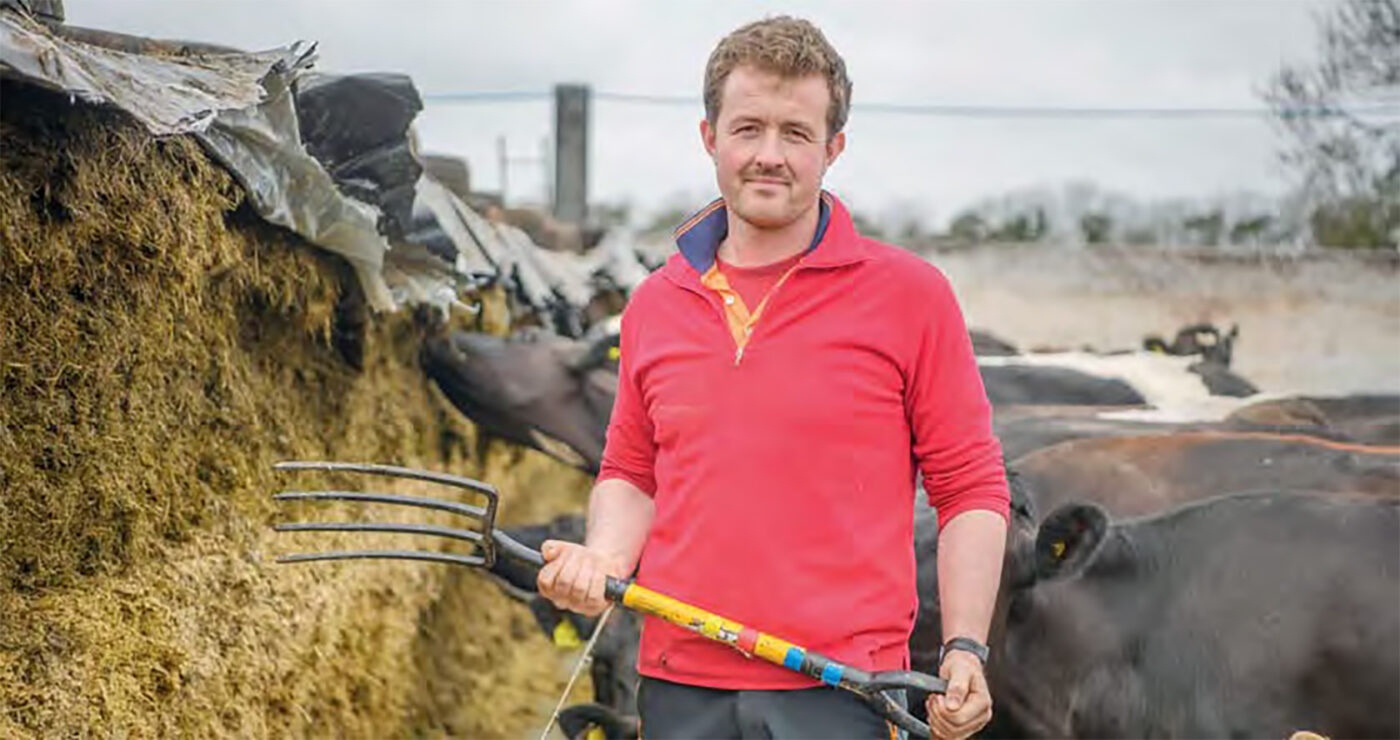
October is a good time for some reflection at Bisterne Farms – Manager George Brown is weighing up what’s gone well, and what might benefit from tweaking in the year ahead.
As we head into autumn, in a lot of ways things are looking positive on the farm; and where it hasn’t quite gone to plan, we seem to have had a bit of luck there, too.
For instance, our maize is still maize; tall, upright and in the field… but it should be in the clamp. Later drilling dates, due to weather and delays in shared machinery, followed by a slow start, put maturity on the back foot. Combined with September’s rainfall – a staggering 162mm, the wettest on record since 1986 – neither the crop nor the combine were fit to go on our typical September 25 harvest date. Perhaps by the time this is published we will have it in the clamp.
It could have spelled disaster, but it hasn’t, much owing to the carry-over of maize silage from last year. It was mature enough not to check the yield like we can see with the greener silage. For us, we’re fortunate that forage stocks look good; from January to September we averaged 9.9t/ha dry matter on the grazed milking platform, which is slightly better than the five-year average.
We were, initially, a 500-head spring calving block and used to mow about 50-80% of the platform for silage. Having transitioned to a 600-cow split block, and taking on more external ground for red clover silage and maize, that has reduced the take from the platform to 20%.
Over the five years we’ve been at the farm, we’ve reseeded about 90% of the grazing platform with long-term mixtures, using red and white clover grass leys, with a few herbs like chicory and plantain. This means that once the red clover and herbs have been exhausted, we’re still left with a good grass and white clover ley.
Autumn calvers had been out by day and in by night – but are now fully housed. We coincide their housing with the final grazing round for the spring calvers, which is 70-80 days long, before we move them to graze fodder beet – buffer fed with baled silage. We outwinter our spring calvers because we haven’t got enough housing, and it’s why we prioritise getting the autumns off the platform, so that we can keep our spring herd in good condition and milking for the positive seasonality.
Staying on the topic of feed, we have fed more cake compared to previous years. When rape meal averages £250/t and concentrate is just shy of £300/t, against a standard milk price of 45ppl – plus a payment on positive seasonality (Arla’s revamped seasonality model) and high milk solids – the cost is balanced and the return favourable.
The cows’ performance and condition have also benefited from the lift in concentrates – in fact I’d go as far to say that the autumn calvers have never milked as well. Post calving, the autumn-calving herd are producing on average 2.2kg/day of milk solids, with the spring-calving herd producing around 1.75kg. Both herds are currently milked twice a day, but the spring calvers will go down to once daily when the period for positive seasonality has passed, before being dried off.
Cow condition is excellent; we’re really happy with how both the spring and autumn herds are looking. We body condition scored them on September 26, with 13%, 72% and 15% of the combined herd scoring 2.5, 2.75, and >3, respectively – the latter group was made up mostly of fresh calvers and larger spring cows.
The New Zealand Friesian does very well in the spring block system. If it’s a dry winter they’ll readily gain condition on the fodder beet; it’s harder if it’s wet, but having eaten 1.2-1.5t of cake in the lactation, and plenty of grazed grass, its unlikely they’ll dry off in anything less than good condition unless there’s a lameness or health issue.
Condition at calving
I don’t mind them carrying a little more condition at calving; I find that they come back into milk well and healthy – but the transition does need to be managed right. We feed our close-up cows a dry haylage that’s low in phosphorus and potassium, which is really important, and we minimise health incidences by responding early to indications.
Our six-week autumn-calving block wrapped up on September 25, and with all our heifer calves born in August, at the time of writing this, half have already been weaned. Weaned at eight weeks old, heifer calves are fed skim milk powder twice daily for four weeks, then once daily for four weeks. To improve dry feed intakes, we have slightly lowered the milk concentration; we aim to get heifers eating on average 2.5kg/day of concentrate as quickly as possible post weaning.
After experiencing some health issues in the calves last autumn, we have made some changes to improve ventilation, including opening up the sides of the shed and relocating the bales we had stored close to the shed – you’d be surprised just how well they obstruct airflow.
All in all, we’re really happy with the heifers this year; 169 were born and tagged, with zero mortality to report. All our replacements are bred from the autumn-calving herd, with the beef coming from the spring calvers.
We’ve already come full circle and have taken delivery of semen this week; this year we have taken virtually all New Zealand Friesian with a small proportion of crossbred, after several years of relying heavily on the Irish Friesian. It’s refreshing to see a range of pedigrees in the New Zealand breeding; it was a criticism that cow families were getting a bit narrow. It’s promising to see this concern effectively addressed.
We use all sexed semen, with bulls for cows selected for kilos of milk solids, decent udders and capacity. So we’ll soon be serving, ready for next year’s replacements before the spring calvers begin their six-week block.
While we are quite concerned about the Bluetongue risk, we’re celebrating one disease win; we went clear on our TB test and we never take that relief for granted.