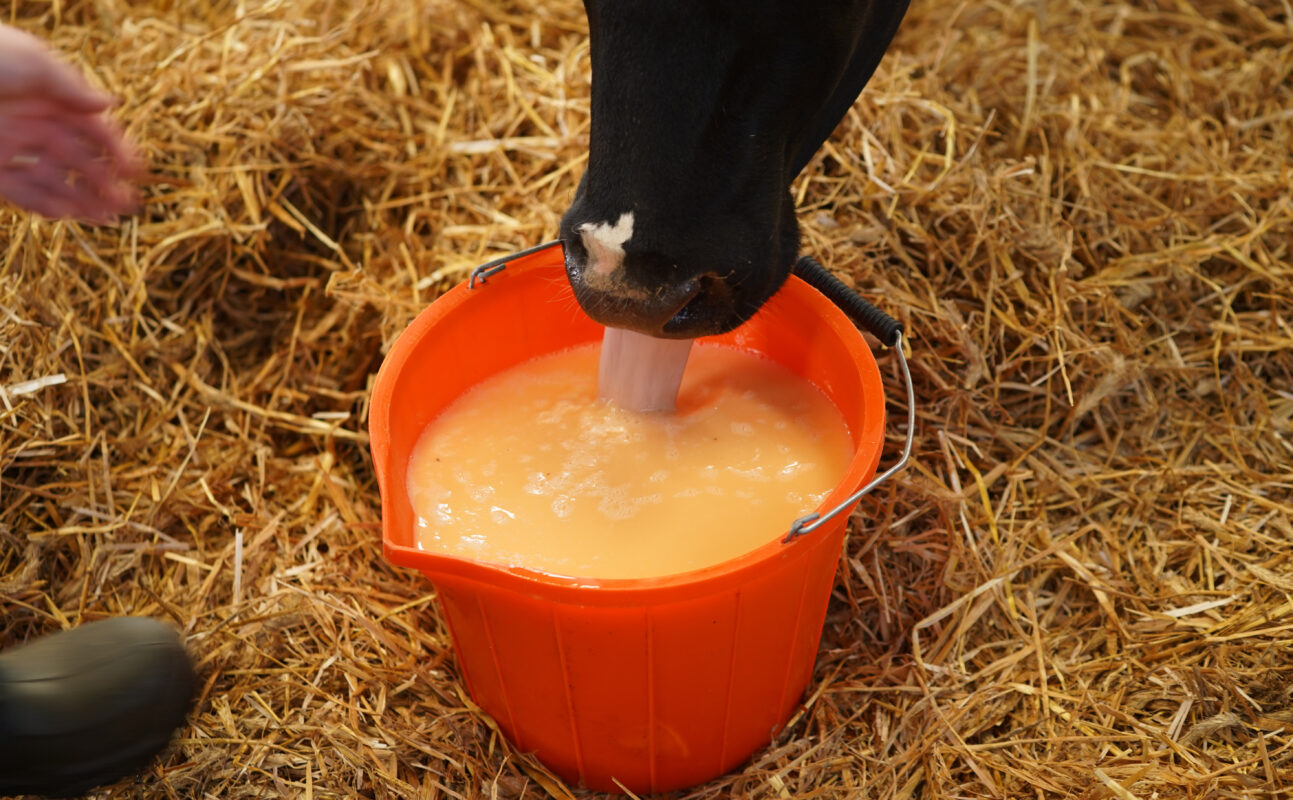
Cows need to replace fluids and electrolytes quickly after giving birth
Giving birth is a major event which can have a significant impact on dairy cows – so careful management, and ensuring a speedy recovery, is vital. British Dairying reports.
Managing the last few days before calving can be a tricky balance, especially if cows have been struggling to maintain their target body condition score. And getting the immediate post-calving period right is also critical for the cow’s recovery and future health, notes Emily Hall, livestock farmer and product manager at Nettex.
“Any cow in her second lactation, and especially high yielders averaging more than 30 litres, as well as older cows, are at increased risk of post-calving problems like a displaced abomasum, retained placenta, milk fever and ketosis,” explains Emily. “These post-calving health incidents come with costs associated with labour, treatment and loss of performance.”
“Water alone will not replace lost electrolytes.”
The average post-calving illness costs £220/cow for each case of milk fever, £208/cow for a displaced abomasum and £100/cow for a case of ketosis. And the effects of these can be long-standing for the cow and impact her future fertility and production.
Limited liquid intake during the calving process, paired with heightened hormonal, dietary and environmental challenges, exposes cows to more stress than they can handle. However, the risk can be mitigated by providing a balanced rehydration supplement like Fresh Calver immediately post-calving. Formulated to include calcium, glucose and electrolytes, it is a highly palatable, water-soluble drink supplement to aid rapid recovery.
As well as delivering essential energy, it provides 48g of calcium to support calcium homeostasis and electrolytes to provide immediate rehydration. It also contains vitamin E and selenium to help support cleansing and immune function.
The nutrient demand of a freshly calved cow is approximately double that of a dry cow, meaning it is important to supply plenty of nutrients post-calving to support milk production and promote recovery after giving birth. According to the AHDB, nearly all dairy cattle experience a period of negative energy balance (NEB) around calving. This is due to a mismatch in their energy requirements at the onset of lactation, when energy demands massively increase yet dry matter intake is at it lowest. Unchecked, NEB can lead to ketosis.
“We are striving to avoid a cow falling into NEB, when she is drawing on her own body fat to sustain milk production and will probably lose condition,” explains Emily.
“We also want the cow to pass the placenta within 12-24 hours – if that doesn’t happen consult your vet. Routinely, it is worth monitoring the cow’s appetite and temperature until it has been passed and vaginal discharge has stopped.”
Cows lose approximately 60 litres of fluid from the uterus in the form of blood and uterine fluids at the point of calving, and it is important to replenish those fluids as quickly as possible to reduce the risk of dehydration.
“Cows will usually drink soon after calving but water alone will not replace lost electrolytes. Furthermore, the expulsion of the calf, combined with the loss of fluids, results in a large ‘space’ available where the abomasum can easily displace to,” warns Emily. “The intake of a large volume of fluid immediately after calving can help fill this space and reduce the risk of a displaced abomasum occurring.”
Both dairy and suckler cows struggling to recover post-calving will benefit from being given the supplement, which has been reformulated to make it easier to mix and more palatable. The new formulation has been developed with insight from cattle farmers and on-farm experience to improve palatability and optimise nutrient inclusion.
“Rapidly rehydrating post-calving cows while supplying the correct balance of glucose, electrolytes, vitamins and minerals will help mitigate the risk of post-calving problems,” says Emily. This will not only save the cost of such health issues, but also set the cow up for the best possible lactation ahead.