
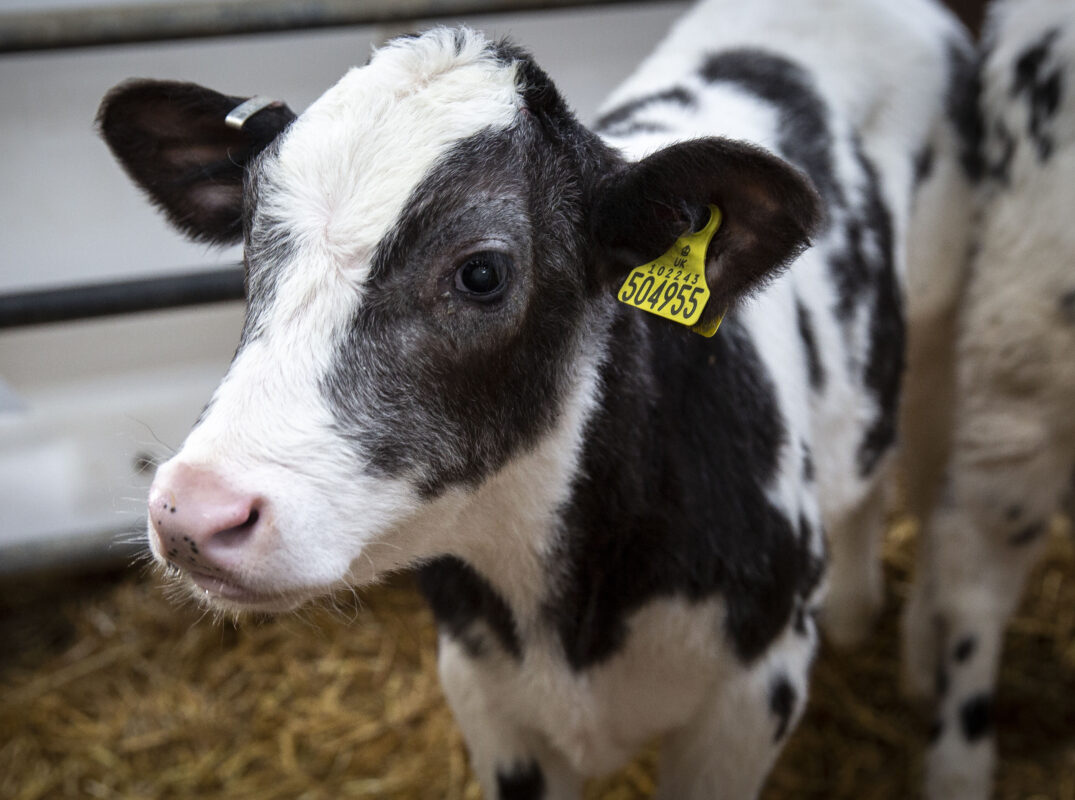
Strategic use of NSAIDs at times like calving and for lameness yields a return of £1.66 for every £1 invested
Farmers practising good animal husbandry want to do the right thing when it comes to treating their livestock, but there is often confusion between the use of antibiotics and non-steroidal anti-inflammatories (NSAIDs). British Dairying goes back to basics.
NSAIDs and antibiotics play a key role in animal – and human – health, helping to address pain, inflammation and bacterial infections. However, a vet conference earlier this year discovered that farmers and vets are often not speaking the same language when it comes to pain relief. The numerous products on the market also add to this confusion, explains Katherine Timms, Ruminant Veterinary Adviser at Ceva Animal Health, who believes NSAIDs should always be available in a farmer’s medicine cabinet.
What is an NSAID?
NSAIDs – including ibuprofen for human use – reduce the sensation of pain and inflammation. They reduce the production of hormone-like substances called prostaglandins. Different prostaglandins have different functions, such as making nerve cells more likely to respond to pain signals and causing blood vessels to dilate.
What is an antibiotic?
An antibiotic is a type of medication used to treat bacterial (not viral) infections. They work by either killing bacteria or stopping them from spreading, thereby helping the body’s immune system to eliminate the infection. They destroy the crucial parts of the bacteria like their cell walls or DNA, and stop their growth by preventing them from making certain proteins that they need to multiply. Overuse of antibiotics may lead to antibiotic resistance in both livestock and humans, which is a major concern, says Katherine. The UK government introduced legislation on May 17, 2024 which banned the routine use of antibiotics on farms – although the industry had already made great progress in this area.
 Katherine Timms at Ceva
The preventative (prophylactic) use of antibiotics is now restricted to ‘exceptional circumstances’ where the risk of infection is very high. Instead, focus needs to be put on hygiene and good animal husbandry and farm management practices, notes Katherine. Antibiotics should no longer be used to compensate for poor hygiene, inadequate animal husbandry and poor farm management practices.
Sales of antibiotics for livestock use on UK farms have more than halved in the past decade, falling to their lowest ever levels. Indeed, the 2022 figures from the Veterinary Medicine Directorate’s Veterinary antibiotic resistance and sales surveillance (VARSS) report stated that UK antibiotic sales for food-producing animals had reduced by 59% since 2014.
Vets have an important role in limiting and minimising the spread of antimicrobial resistance (AMR), explains Katherine. They are pivotal in helping farmers to understand how antibiotic use contributes to AMR, as well as the extensive role NSAIDs play in providing pain relief in dairy cows.
Pain relief
Vet and dairy farmer Sam Bowker, a director at Blackdown Farm Vets in East Devon, says: “Pain in dairy cattle can occur from a wide range of physical injuries, diseases or procedures which can lead to changes in behaviour and overall wellbeing. Our experience is that farmers are keen to provide pain relief for their animals, but are perhaps unaware of the extensive role that NSAIDs can have in achieving this. In addition, their
use can help reduce the use of antibiotics.”
Key things to look out for in a cow in pain are:
- Behavioural changes: Reduced movement, reluctance to walk or stand, limping, vocalisation, decreased appetite and becoming withdrawn
- Physiological responses: Increased heart rate, respiration rate, and cortisol levels (a stress hormone)
- Postural changes: Arching of the back, head down, or abnormal lying positions
- Facial expressions: Alterations in facial tension, ear posture and eye appearance.
“Common causes of pain include lameness, injuries, infections like pneumonia and mastitis, surgical procedures, husbandry procedures like dehorning, and calving – both during and after the calving process, especially in cases of difficult births,” says Sam.
“There will be different levels of return on different systems.”
“NSAIDs are exceptionally versatile and can be used in a variety of situations where pain relief is required. This includes treating pain and inflammation associated with mastitis and pneumonia. More recently, studies have proven that there are huge benefits in using NSAIDs for digital dermatitis as well as the routine use of NSAIDs in heifers at first and subsequent calvings, significantly reducing lameness.”
Calving
There is comprehensive research on the use of NSAIDs at calving to improve the welfare of both cows and calves in the post-partum period.
Productivity gains include:
- Milking performance The 305-day yield of ketoprofen-treated cows was 664kg higher than those not receiving treatment
- Ketoprofen-treated cows tended to conceive 22 days sooner than those not receiving treatment, and more ketoprofen-treated cows conceived by 100 days-in-milk (65.7% vs 48.6%).
Digital dermatitis
In trials, untreated cows with digital dermatitis have been found to be 2.57 times more likely to be lame compared to those treated with an intramuscular injection of ketoprofen.
- Cows that were lame prior to treatment and did not receive ketoprofen were over 20 times more likely to remain lame a week post-treatment compared to cows that did receive ketoprofen
 Sam Bowker at Blackdown Vets
- There is also a benefit in milk yield; on average, all treated animals (including those that were not lame) gave nearly 3kg/day more. Freshly-calved cows, which were lame at diagnosis, gave over 10kg/day more over seven days.
Managing mobility in heifers
There are many benefits to routinely using NSAIDs in heifers at first and subsequent calvings, as well as with a therapeutic trim and hoof block every time a heifer is identified as lame. This protocol is shown to lead to an absolute reduction in lameness of approximately 10%, with severe lameness down 3% and a reduced likelihood of cows being culled, compared to those given a trim and hoof block without NSAIDs.
“All NSAIDs are currently off license in neonatal calves and in heifers at calving, but can be prescribed by your vet if deemed beneficial,” says Sam. “There are certainly welfare and productivity gains to be had, but it is important to highlight that the recent studies were carried out in high-yielding, fully housed herds. It may be the case that there will be different levels of return on different systems.”
Antibiotics should now only be used if really needed, and it is encouraging that the farming industry is continuing to reduce their use, he adds. “While vets often perceive that farmers are worried about the cost of medication, using NSAIDs strategically is proven to show a substantial return on investment of £1.66 for every £1 invested. This makes a compelling argument for considering their use more extensively and reviewing protocols with your vet.”