
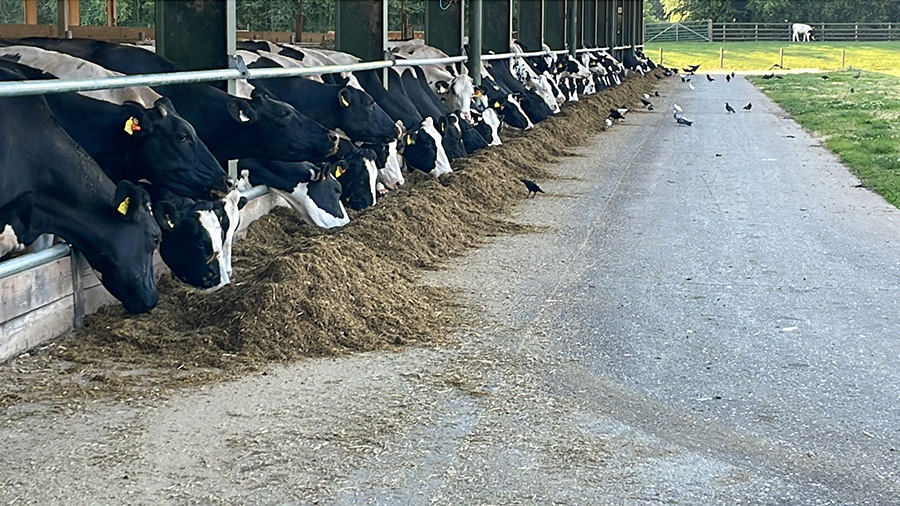
This month, Matt Bolton takes over authorship of the NMR / RABDF Gold Cup column, giving an insight into the breeding decisions made at Harper Adams’ Future Farm.
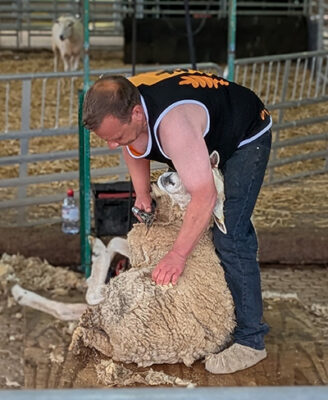
Hello, my name is Matt Bolton and my two main roles at Harper are managing the beef and sheep enterprises alongside a small and very supportive team. I also do all the breeding and genetics for the dairy herd. I came to Harper in 2012 as the Assistant Herd Manager and have led on breeding decisions since 2016. The core of my philosophy since that date has been to breed functional cows which are easy to manage. We expect our cows to be commercially viable and both a teaching and research resource.
We breed medium-sized cows in terms of stature with good chest width, decent udders and sound feet and legs. We also focus on health and longevity traits while maintaining litres. More recently we have been using sires with high feed efficiency figures, and it will be interesting to see how this translates in the coming years.
We generally use the profitable lifetime index (PLI) as a base, but it is important to understand where that figure comes from. So it is not the be all and end all for us; we would tend to use a sire whose PLI is dominated by health and longevity traits and less so from production.
We have genomic tested at Harper since 2021 and I find the data a valuable resource, particularly as we have been using sexed dairy semen to generate all our dairy replacements since 2019. I select the animals we are going to breed dairy replacements from myself, and I try to use both a combination of genomic and phenotypical data.
This means we predominantly breed from both our maiden and milking heifers; most of our second to fourth lactation animals go to beef and quite a few of our fifth lactation plus cows are served to dairy. While these animals would rank near the bottom genomically they have proved that they work in our system, and we want to hang on to those genetics.
This process can be quite time consuming, and I can totally understand why people would pick one data point like PLI and select the top-ranking sires. However, breeding companies have some really good programmes nowadays and do offer excellent support. I would not have made the genetic progress with the herd at Harper without their advice and input.
As Carrie mentioned in the last article, we have begun to establish a small herd of crossbreds. This has been a brave new world and a learning experience for me having only worked with Holsteins – except for the very first dairy farm I worked on back in Lancashire which had a herd of Ayrshires. At present we have 30 crossbreds; a mixture of Scandinavian Red and Montbéliarde.
Serving discussion

There has been quite a lot of discussion regarding what we are going to serve them to, and we seem to be coming down to the idea of serving the Reds to a Jersey and the Monties to beef (Angus).
Using a sexed Jersey bull on the Reds should provide a good complement in terms of each breed’s strengths and weaknesses, provide good milk solids and complement our overall breeding policy. The reason for putting all the Monties to beef is that we don’t require too many replacements at this stage (we will cross some Holsteins to give us another year of F1s). We are also not sure how they will perform in our system; I think the Monties are going to have to prove themselves.
Comparing performance
It has been really interesting seeing how these crossbreds have performed so far. We have been running a small group of similarly aged Holsteins alongside them which has allowed us to compare the performance of the three breeds. We will follow them through to calving, collecting all the data we can, to see if and what the differences are.
The next few months are quiet in terms of breeding; we will not be looking to change bulls until the April proof run (unless the December run throws up some surprises). I will have some presentations to do for our students and go through the genomic data of our herd with them; hopefully there won’t be too many blank faces!
My time will be taken up with various research projects taking place, some animal handling with our first-year vet school students, and getting ready for a beef trial starting at the beginning of next year. Honestly, no two days are the same at Future Farm.