
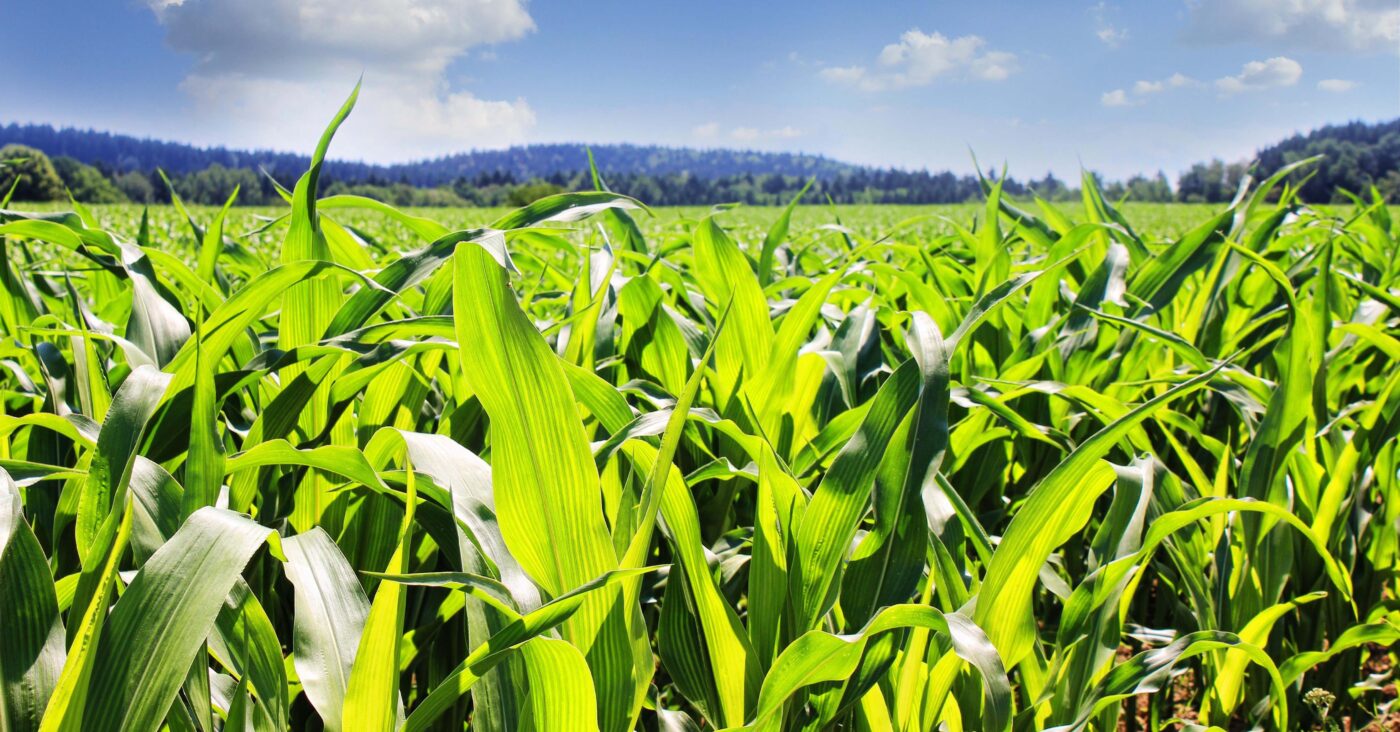
The changing climate will result in more favourable conditions for growing maize across the country
Weather patterns are becoming more extreme and herd genetics are changing – with both influencing grass and forage strategies. Are we reaching a tipping point, where the practices of the past become unsuitable for the future? British Dairying takes a look.
Productivity and profitability will be the dairy sector’s primary focus over the next decade – and the best way to achieve that is through investing in grass and forage. That’s according to Jimmy Goldie, Chief Technical Officer at Carrs Billington, who spends a lot of time on farms up and down the country. “In any business, the balancing act is value versus cost,” he says. “Dairy farmers are perhaps more attuned to that than other sectors: The feed input/milk output equation has always been more finely balanced.”
Milk prices have been ‘reasonable’ of late, encouraging producers to think more positively about the future. The same is true of ‘favourable’ feed input: milk output ratios. And efficiencies have been improved by greater use of genomics and genetic selection, with even quite advanced genomic programmes become mainstream,
he points out.
Potential
“We’ve seen big progressions over the past three to five years. Herds now have a lot of latent potential. Producers, understandably, want to make the most of this. And it’s forage quality and quantity that can help meet the needs of a differently tuned animal.”
Home-grown forage is the easiest route to profitable milk production. “That means not just a dairy cow diet with at least 50% forage, but where that forage component is ‘right’.” The biggest challenge for UK dairy producers is the resilience of individual farms, Jimmy warns. “The climate is changing. There’s huge variation across the country, with some areas more affected than others. The degree to which your own farm is affected will depend on where you are in the country, how you’ve been farming up to now, and of course the underlying factors – soil type and nutrient availability – which influence what you can and can’t grow.”
This is especially important for farms with historical reliance on grass silage, he explains. Some will have an opportunity to produce alternative forages, while others might have to ‘stay the course’ with grass but may need to adopt more diverse swards. “Perennial ryegrass has stood the test of time and is highly productive – as long as it has adequate moisture. But it’s really limited during drought.” In these situations, grass-type forages will offer producers a resilient alternative. “Clovers, for example, can make up a greater proportion, as can multi-species swards. We’ll see more producers opt for deeper-rooting species like chicory and plantain.”
Filling clamps
For alternative forages, the changing climate will lead to much more favourable conditions for maize, aided by the emergence of improved varieties that can deliver higher starch and increased yields, says Jimmy. Wholecrop cereals will provide another ‘stream’ that can fill clamps and feed stock over the winter.
“I think producers should seek to spread their net further still,” he notes. “In chasing resilience, it will be important to spread the risk. Producers should adopt a forage strategy that gives assurance through a wet year or a dry year; we’ve had both extremes over the past two years. That will mean growing a variety of home-grown forages which, as a whole, should perform irrespective of weather.”
Such a forage ‘patchwork’ has other advantages, too. “There’s been a return to more mixed farming; that’s likely to increase further as more farms look to regenerative practices,” says Jimmy. “So you can think about growing kale or other brassicas, which not only provide winter fodder for beef and sheep enterprises, but also give an alternative option for overwintering dairy heifers, for example.”
While resilience is important against further likely shifts in weather patterns, implementing a ‘forage rotation’ will benefit soil health.
“In chasing resilience, it will be important to spread the risk.”
“Bringing everything into the rotation allows rejuvenation of grass swards, while incorporating brassicas or legumes helps nutrient recycling too. Bear in mind regenerative good practice – don’t leave bare soil or invert it too often,” he adds. “Look to good practices like under-sowing a maize crop with grass, to help reduce soil erosion and nutrient losses post-harvest.”
With easy availability of genomic tools making high-performance herds the norm rather than the exception, producers set on maximising home-grown forage will need to prioritise nutrient requirements.
“The goal is to optimise the rumen function and ensure a high dry matter intake that balances fibre, energy and protein,” Jimmy emphasises. “Seek forage with higher protein and higher starch – it’s more profitable to have these sources home-grown. Review performance of your farm at field level. Know what each field can deliver: How the soil, its structure, pH and nutrients can be further exploited, or their limiting factors mitigated.”
Then there’s the existing sward. What percentage of it is productive grasses, rather than weed species? Jimmy suggests pasture indexing in the spring, to prioritise those most in need of attention.
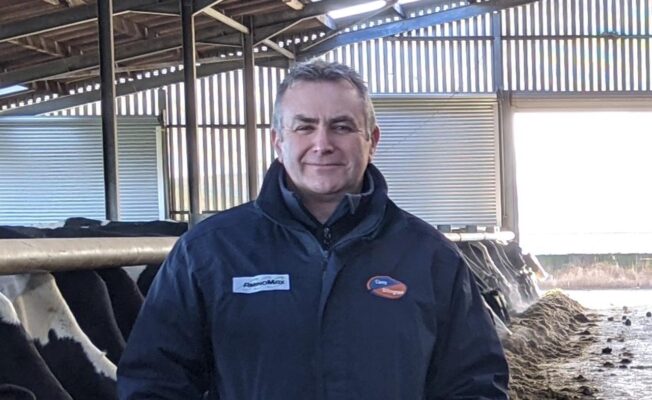 Jimmy Goldie says producers should regularly review production practices
Rejuvenation
“Assess each individually. Which will need rejuvenation? Consider soil type, too. Lighter soils are more prone to drought, so rejuvenation or reseeding should incorporate more resilient, deeper rooting species to see the pasture through a dry spell.”
Fields known to be more reliable, with steadier soil moisture levels, are where producers should seek to establish high-yielding diploid and tetraploid mixes, which will use the heavier soil to deliver more growth. “Of course, your intended use for the pasture is an important consideration. Cutting, grazing or a mixture of the two? If it’s for conservation, how many cuts will you aim for? Or are you thinking about an extending grazing system?”
Grass should remain the backbone of any forage system. “Yes, it’s essential to diversify the forage source and spread risk across different crops, but the UK remains one of the best places to grow grass and to turn it into milk,” says Jimmy. “Diversification applies to grass, too. Make the most of grass and clover but implement that mixed sward.” For example, the Carrs Billington mixture Mega Cropper is designed as a four-times-a-year cutting ley as well as making a palatable, dense grazing sward for the autumn. “All our mixtures are formulated by Barenbrug with its own Recommended List (RL) varieties. And while it’s predominantly a blend of diploid perennial ryegrasses and a tetraploid hybrid, it also includes Timothy and white clover. It can deliver around 14t/ha of dry matter per year, with a mid-May first cut.
“For a longer-term option – thinking about managing rotations – Mega Choice blends two of the highest yielding RL varieties, Moira and Galgorm. It too includes Timothy to increase persistence, while clover keeps up protein levels,” says Jimmy. “Its stand-out feature is exceptional spring growth, giving an early bite to provide reliable turn-out while other fields remain shut up for a first cut.”
Meanwhile, where beef and sheep enterprises sit alongside a dairy operation, the classic Barmix remains a ‘go to’ option for a true multi-species approach, featuring tall fescue, cocksfoot and Timothy alongside diploid and tetraploid perennial ryegrasses.
Review
“These swards are well-suited to less fertile fields and display great drought tolerance. Yet they can still provide in excess of 12-13t/ha per year when grazed or cut.”
Finally, farmers should review production practices, he notes. “An effective forage strategy involves more than planning. When conserving forage, make every effort to cut at the right stage, ensile and clamp correctly, and preserve as much as possible without wastage. It’s difficult to measure wastage, but clamp losses can typically be up to 25%. It’s not easy to see, but aim to minimise it.”