
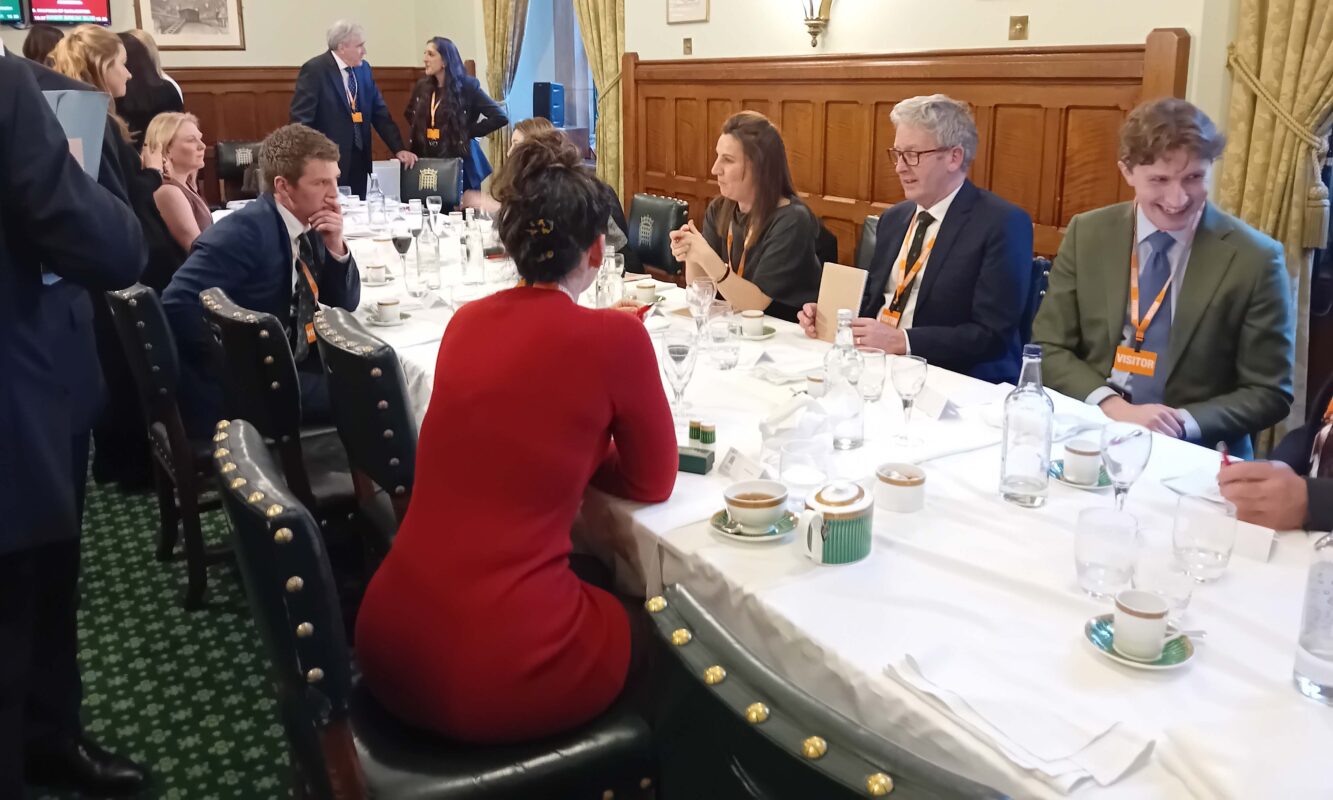
The farm matching service could connect aspiring farmers with retiring landowners seeking succession
Bringing farmers, banks, consultants, educators and other industry professionals together, British Dairying recently organised a round table at the House of Commons to explore the potential for a new land matching service. Sarah Peacocke reports.
Are you looking for a farming opportunity, as a tenant, equity partner, share farmer or another option that gets you on the first rung of the ladder? Or are you a landowner, wondering how to step back or retire, looking for someone to come and run your unit while keeping the farm in the family and making an income? This was the subject of a highly successful round table at the House of Commons in late February, organised by British Dairying and sponsored by Lely Atlantic.
Farming leaders, under the chairmanship of the Shadow Minister for Environment, Food and Rural Affairs Robbie Moore, found plenty of common ground discussing the need for an industry forum that could match potential candidates with landowners.
Benefits and options
“I don’t know why it hasn’t been done before,” said Robbie. “I think we should talk about the benefits and see how we could encourage something like this to develop into a framework. Where you’ve got different parties willing to offer capital, assets, shares, or equity structures; not just the land, we need to look at the options.
“Having something like a matching service that enables different parties to come together is interesting for me to work with, to see what role policymakers, legislators or the Government can play in doing this. The dairy sector is very forward-thinking and has a lot of capital invested; it’s going through big changes through innovation and automation.
“Succession is always a challenging conversation, and we’re not as good at it as other countries,” he added.
 Farm matching roundtable discussions were held at the House of Commons
“I think there’s a lot of learning to be done in this space that can be rolled out across not just dairy but all sectors, ultimately helping them to flourish,” Robbie continued. “Matching is a really good service. It’s something that has certainly opened my eyes, just based on the level and depth of conversation we had in the House.”
Such a system already operates very successfully in Scotland, under the banner Scottish Land Matching, but currently has five potential candidates for every possible match. In the past five years, it has received over 1,000 enquiries.
There is certinaly a population of young people keen to get into farming, but who don’t have a succession route through family farms or the ability to access the capital necessary to start the journey. The matching service was seen as a body that could pull together those looking to get into the industry and equally those who are looking to exit.
Set up and funded by the Scottish Government, Scottish Land Matching been operating for five years and has had a big buy-in from the rural industry. Today, it has a website and a registration process, and its role as an independent adviser is to start the engagement process.
Predominantly focused on dairy, livestock, sheep and cattle enterprises, the scope is widening. And around the table there was genuine support and belief that such a body should be set up in England, linking together with the Scottish organisation as well as similar set-ups in Wales and Ireland.
However, there are many more aspiring farmers than opportunities, with any tenancies gathering huge numbers of applicants; often from young people with very credible backgrounds who already own machinery or animals. Older farmers need to understand that they don’t have to sell their farms or their cows – there are other options available.
This is a progressive route to continue farming; having someone else do the hard graft for you so you can enjoy your life’s journey in a different way as you get older. But finding these producers and then joining them up with someone who can do the job well is the issue.
Financial edge
Let’s suppose you find the right opportunity – and the right person. The next problem is finding the capital. Agricultural universities represented were asked to look at the financial elements of the courses they run. All too often matching services find a young farmer with cows, machinery and technical knowledge, but without an understanding of balance sheets, cash flows, budgets and financials.
Agricultural educators are very good at teaching history lessons; how agriculture was in the past, but instead need to be looking at what the picture will be in 10, 15 or 20 years.
When applying for tenancies, for example, it is vital to have a workable and realistic business plan. This is where consultants can offer support, and banks can consider being more flexible when looking at loan options.
Bank representatives admitted that any new business startup is riskier in terms of offering finance, and traditionally security has been offered against machinery but not livestock. That is now changing and will, with the right business plan, make it easier for new entrants to borrow.
There are also opportunities for the bank to pay for consultancy and advice for the first three years of a new business operation; something which could be key to its success. And while some applicants approach banks with robust plans, in many cases, there is an inherent lack of understanding about what a lender needs.
Share farming in New Zealand is often promoted as a route for young farmers to follow, but there was a general feeling that today we need to think outside the box. There may be options to increase equity levels in livestock, machinery or land, but each case needs to be looked at individually, with both partners willing to explore longer-term opportunities.
“British Dairying is going to lead the concept of Farm Matching forward.”
Participants agreed they are seeing a move away from longer-term tenancies with more two- to five-year agreements. This does concern the industry as so many producers are having to invest in new facilities to meet the changing requirements of their milk buyer – without long-term security.
It is vital to start conversations early, to ascertain exactly what each partner wants from the new arrangement – and to remain flexible. Worries about inheritance tax (IHT) and succession may drive more of these relationships forward, and one dairy farmer was keen to point out that it is really ‘only in Britain’ that we have this obsession with land ownership. He cited an example of a radio journalist who always wanted to work for a radio station but never had an ambition to own a radio station.
This industry leader has grown his farm holdings from 40 cows 40 years ago, yielding 100,000 litres annually, to 1,600 cows and nearly 10m litres today. A couple of years ago, he realised that ‘people’ are fundamental to his business and that his four children aren’t necessarily going to succeed him.
So, he’s brought his three managers into the business and believes they hold the future success of his company in their hands. A lot of development is about upskilling, and it’s important to remember that an average dairy farm with 280 cows is now a million-pound business, he reminded the table.
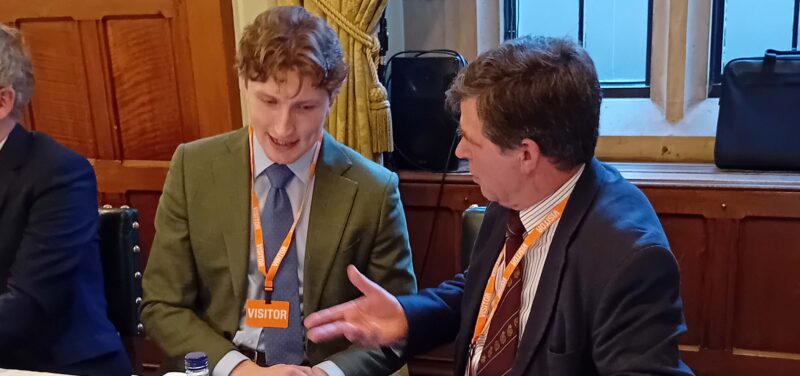 Banks say strong business plans improve new entrants’ chances of securing finance
So, where do we go from here? British Dairying is going to lead the concept of Farm Matching forward and will be holding future meetings to look for ways to set up and develop the concept.
In the meantime, we’d love to hear from any farmers who are interested in offering an aspiring young farmer a chance to play a future role on their farm – or to hear from young farmers looking for such opportunities.
We would also love to talk to anyone who has entered into such an agreement as a case study. Please email olivia@britishdairying.co.uk and a member of our editorial team will get in touch.