

Aaron Brown, Trouw Nutrition
Feeding calf milk replacer that closely resembles cows’ milk can pay dividends for calf development and performance, as practical research shows. British Dairying reports.
The calf milk replacers of today are very different from those used 20 years ago, with research shaping an understanding of efficient calf nutrition.
Speaking at a calf rearing roadshow organised by Trouw Nutrition GB, and sponsored by MS animal health and SCCL, Aaron Brown from Trouw Nutrition explained how the company’s Lifestart programme used evidence-based practices to improve heifer growth and performance.
“We know considerably more about how to tailor the diets of pre-weaned calves to unlock their potential for long term production and survivability,” he said. “The programme is built on a better understanding of calf requirements and the most important key performance indicators (KPIs) for efficient heifer rearing.” (See fig 1).
Growth rate
He suggested the traditional approach to calf rearing focused on moving calves off milk as quickly as possible, as it was considered more expensive than other feeds. But now, it is widely accepted that capitalising on the superior growth rate potential of pre-weaned calves requires keeping them on higher feed rates of milk for longer. This is not only cost-effective but also increases energy intakes, as milk remains the most effective energy source for these calves. “Increasing milk and energy intakes not only helps the calf grow more quickly but it also supports the development of key organs,” added Aaron. “It has a huge impact on gastrointestinal tract development.”
Calves fed a higher plane of nutrition through milk solids have shown to be better able to recover from many disease challenges pre- and immediately post-weaning. Additionally, these calves exhibit better fertility performance and increased survivability when entering the herd.
However, while calves will readily consume more than eight litres/day of milk replacer, market research shows that 65% of farms are still feeding six litres/day or less. This is partly due to concerns over cost and ensuring sufficient dry feed intake at weaning to promote rumen development. “We now know that feeding more milk does not have a negative impact on dry feed intakes, but rather maximises daily energy intakes which must be a priority on calf rearing systems,” he said.
“Solid feed intake is negligible in the first three weeks of life whether calves are on ad-lib or restricted milk feeding systems. The key to achieving sufficient starter intakes in calves fed elevated levels of milk is the feed curve and weaning management. Gradual weaning allows unrestricted milk feeding to be implemented during early life and to then rapidly accelerate solid feed intake.”
Formulations
Aaron also emphasised the need to look closely at milk replacer formulations, stressing that the closer a milk replacer is to cows’ milk the better for the calf. He pointed out that cows’ milk is more complex that most people know, but that everything in cows’ milk is there for a reason.
Most milk replacers, he explained, have lower protein and fat content than cows’ milk but higher lactose (fig 2).
Increasing fat in milk replacer should be a priority, as fat is the highest energy component of milk. Increasing fat will increase metabolisable energy (ME)/kg of dry matter (DM). Energised calf milks are formulated to be closer to cows’ milk with higher fat and protein contents to better meet calf requirements.
 Georgina Thomas, Trouw Nutrition
“The label on the bag will give some basic information but not the full picture. Low fat and protein intakes will mean lower levels of amino acids and energy, which will compromise growth and development,” he said. “High fibre or high lactose should be a cause for concern, especially if fibre is greater than 0.05%.
“Increasing the volume of milk fed and the energy content can play a big part in boosting energy intakes, producing better developed and more robust calves at weaning.
“New research shows there are big benefits to be realised by looking more closely at the makeup of cows’ milk, particularly milk fat.”
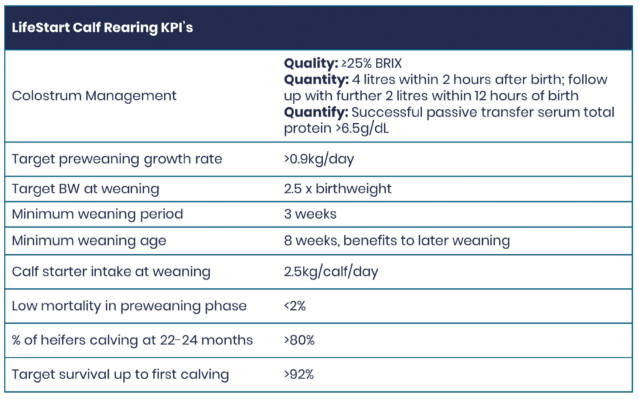 Figure 1: Key performance indicators (KPIs) for cost-effective calf rearing
Georgina Thomas from Trouw Nutrition stressed the importance of a deeper understanding of whole milk and said no component in milk is there by chance. Instead, each has a key role to play, many of them signalling specific aspects of calf development.
“The fat in bovine milk contains over 400 different fatty acids, making it one of the most complex fats in nature. Fat composition is crucial to calf development,” she explained.
“Calves were better placed to move onto solid feed.”
“When we compare whole milk with the vegetable fat blends typically used in calf milk replacer, there are some significant differences.
“Vegetable-based fats are missing the shorter chain fatty acids, meaning the overall fat is unbalanced and deficient compared to cows’ milk.”
These shorter chain acids bring multiple benefits to the calf, she added. Most significantly they play a key role in the development of the rumen and gastrointestinal tract, helping make calves more resilient and less prone to scours.
The challenge has been how to supplement milk replacers effectively as the two common supplementation methods both have drawbacks, affecting palatability and having a strong smell.
Georgina explained that a new patented fatty acid product, LactoFat Pro, successfully overcomes the issues of inclusion, meaning milk replacers containing it will provide a more complete fatty acid profile.
“Trials confirm the benefits of feeding a fatty acid profile which more closely resembles the fat in bovine milk. The biggest difference is in the development of the gastrointestinal tract, where the villi; the absorptive area in the gut, were longer and more developed. This means there was a bigger surface area for absorbing nutrients.
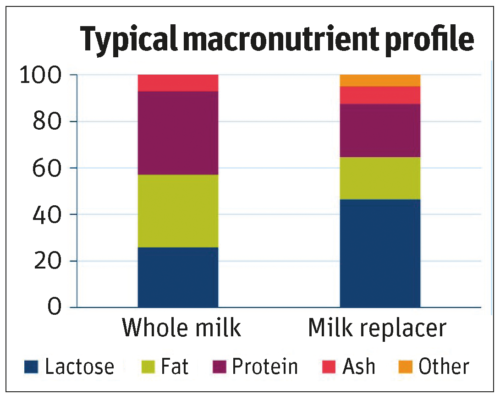 Fig 2: Whole milk vs milk replacer
“The improved gut integrity plays a vital role in protecting calves against scours. Feeding Milkivit One compared to a traditional energised calf milk was shown to reduce the incidence of scours (fig 3). In addition, these calves required fewer treatment days and had a reduced risk of mortality,” she added.
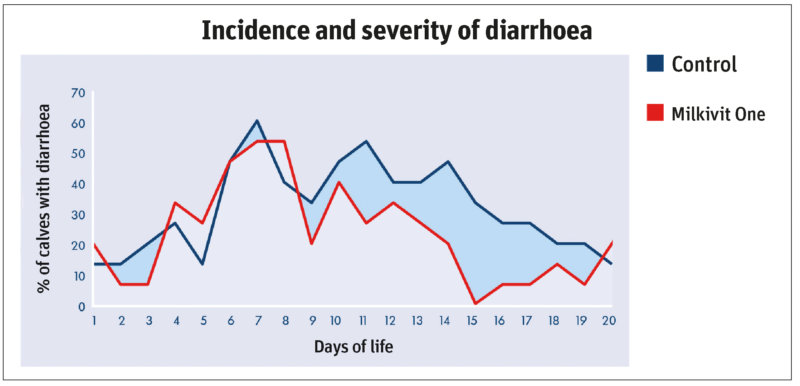 Figure 3: The impact of diarrhoea when fatty acids are balanced
“The fatty acid has also been shown to improve rumen development meaning calves were better placed to move onto solid feed, consuming 26% more starter feed over the milk feeding period when fed milk replacer ad-lib. The combination of a higher intakes of a higher-energy milk replacer and greater solid feed intakes combined to increase overall energy intakes for faster growing, stronger and more robust calves.
“With 90% of farms affected by calf scours and with scours responsible for the death of 1-2% of all calves born, as well as costing on average £58/calf treated, the opportunity to improve calves’ resilience to scours should not be under-estimated.
“Furthermore, the better the gastrointestinal tract develops in young calves, the better placed they will be to thrive and hit target calving age.”