
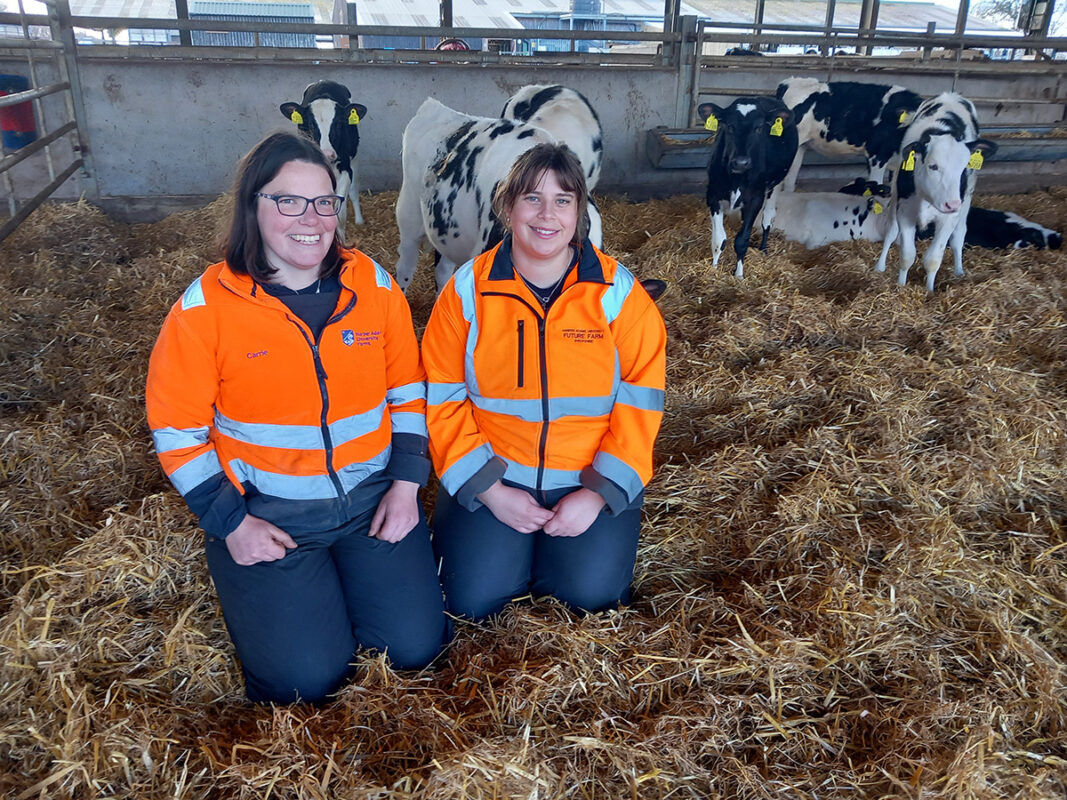
In this month’s RABDF / NMR Gold Cup column, Youngstock Manager Carrie Gauld takes up the pen, and reflects on keeping stock on-target amid the changing seasons.
Hi, my turn this month; my name is Carrie and I manage the youngstock here at Harper. The youngstock team here comprises me and Erin as full-time staff. We work closely with one of our PhD students; Chloe, and Josh – who manages the grass – who give us backup in busy periods and over holidays.
I always describe what we do as caring for the heifers from calving to calving; from their birth to when their calf hits the ground. This includes all aspects of rearing, growing, health and fertility. We also rear a proportion of our beef crosses to enter our beef unit, with the remainder being sold through Meadow Quality.
During the summer months we graze all our youngstock where possible. Currently we are turning out post weaning, and the only heifers housed are those in for breeding and those transitioning to calving. Like many farmers this past month, we have been holding our breaths and praying for rain as the grass was rapidly disappearing.
We did reach the point for a fortnight when we had the pre-bulling heifers, some beef crosses and some ewes and lambs all grazing the same last field that had any grass left (thanks once again to Josh and his extensive networks of electric fencing). Thankfully the rain came, and we managed to rest the other fields just long enough to return to some grass. Currently, the pre-bullers and all in-calf heifers are running without any supplemental feed. The weaned calves are still receiving some concentrates.
Last year we decided to dip our toes into some crossbreeding, with the aim to run a small group of block-calving crossbred cows within the herd. Our first F1s have just turned 11 months, so we are focusing on making sure that they are all hitting target weights and will be ready to breed together.
The second lot of calves will start hitting the ground next month as well. It has been really enjoyable watching these first calves grow through this past year, and we are really looking forward to this next stage.
These crossbreds have also been the first dairy replacements that we have grazed on a mixed sward grass ley, alongside a few Holsteins. It has been a learning curve for us grazing something quite different, and I think there is still more to learn.
To again touch on the lack of grass lately, these heifers have been maintaining their daily liveweight gain (DLWG) on this mixed sward, with the Holsteins achieving an average of 0.93kg/day, the Swedish Reds 1.04kg and the Montbéliards 1.07kg, without any additional support.
This has been closely managed, with the group receiving a fresh break at least every other day, and little things like using drag troughs to make sure water is always fresh and available. Personally, I have also really enjoyed the bug life in the field; a few weeks back it was covered in butterflies, and there are multiple species of bee. I get very distracted on stock checks when the swallows are hunting over the heifers; I could watch them for hours.
Managing everything at grass in the summer can feel like a never-ending game of Jenga. Before pregnancy we manage every animal by weight and they will graduate to the next group up when they reach the target. Then they come in before breeding at 11-12 months to allow them to adapt back to the shed before service – again when they reach weight and age targets – before then being turned back out at around seven weeks of pregnancy. They then remain out until two months pre calving.
This need to move and handle animals regularly goes hand-in-hand with regular weighing and ensures we maintain our target of weighing every animal post weaning monthly, even through the summer (life is much easier in the winter!)

Since the last article we have had our Gold Cup open day. Thank you to everyone who came along. It really felt like the culmination of months of planning (and pressure washing!) A massive thank you to Kate, everyone at RADBF and those behind the scenes here at Harper. We hope that those of you who came along found it worthwhile, and once again the cows didn’t blink at having their space invaded.
It is coming round to that time of the summer when planning is in full swing for the new term and it won’t be long before the students are back in full force. One of my favourite things is weighing calves with students, particularly those that have never been around farm animals before. It is definitely the session from which I get the most positive feedback.
So the year continues on and we are already talking about turn-in, and the preparations for the outwintering in-calf heifers, which this year will be on fodder beet. This is a change from our usual kale and the first time for me managing heifers on this forage, as ever working closely with the rest of the team to make sure we get it right.