
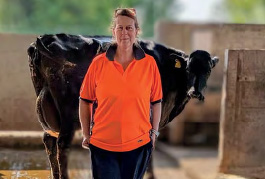
In her final NMR / RABDF Gold Cup column of the year, Kate Robinson, Ruminant Section Manager at Harper Adams’ Future Farm, reflects on recent changes and looks ahead to where they should invest next and what the coming years might hold.
As we wrap up our year as the Gold Cup comment farm, it still feels surreal. It’s hard to believe it’s been 12 months since we were loitering at Dairy-Tech, pretending to be calm while waiting for the winner to be announced. Huge congratulations to all this year’s shortlisted farms, and an even bigger well done to Paul Broad of T N Morrow and Partners, Treveale Farm, the new champions. We can’t wait to look around your farm on the open day.
The nights are slowly drawing out, with daylight stretching to 5pm. Snowdrops are appearing in the garden and buds are forming on the trees, though winter still reminds us it hasn’t finished with the threat of snow and freezing temperatures.
January always feels like the longest month ever invented. After the excitement of Christmas and New Year, we all get dropped back into reality with a thud. This year brought new reports on mental health, including a thought-provoking study on Burnout 2026 by Mental Health UK.
I recently completed mental health first aider training, which has given me the tools to support people who might be struggling. Creating mentally healthy workplaces isn’t optional any more – it’s essential if we want our people, communities and businesses to thrive.
January was also conference season, which means learning, networking, and the occasional free pen. Early in the month, our team spent a day with Owen Atkinson from the Dairy Veterinary Consultancy focusing on stress free cattle handling. We assessed our handling systems, collecting yard and walkways, and explored both human and cow psychology in the parlour. Cows thrive in calm environments; as tempting as it is to shout or call, they respond far better to quiet, gentle coaxing. Some of the team took time off to visit LAMMA, catching up with friends and exploring the latest innovations in our sector. Meanwhile, the Oxford Farming Conference took place; although we couldn’t attend this year, our vet Dan was invited to present on ‘Lessons in Lean’, a systemic approach to improving farm business performance.
Two of the team travelled to the British Cattle Breeders Conference in Telford, returning with excellent feedback from speakers across both the beef and dairy sectors. I attended the British and Irish Society of Animal Science (BISAS) Dairy Cow Nutrition Conference, also in Telford, and came away with several valuable insights. One standout message was that water is the ‘forgotten nutrient’. It prompted us to review the water supply and quality across our sheds, and we’re now installing additional troughs.
Carrie has officially begun her PhD investigating transition milk and heifer health. She recently joined academics on a trip to Scotland for the calf conference, sponsored by the Digital Dairy Chain. This explored best practice in calf rearing, health and performance. She continues to work part-time on the youngstock unit, supporting the outstanding results the team consistently achieves.
I was fortunate to be awarded a place on this year’s Hershel Women in Leadership course, delivered by the UK Institute for Technical Skills and Strategy. The programme spans six months and began with an inspiring talk from Helen Sharman, the first UK astronaut. It has already given me the chance to connect with women working in specialist fields like cancer research and forensic science. I even learned about a ‘body farm’ used to study natural decomposition – quite different from the farms we’re used to.
New ideas and tips
Looking ahead, we have two courses coming up: ‘Practical calving’, and ‘grazing the cow and grass maths’. Josh, our grazing platform guru, is always keen to pick up new ideas and tips from grazing farmers. Refresher training in areas like calving ensures we continue to give our cows and calves the best possible care.
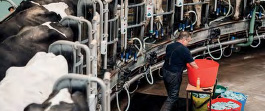
The cows have worked hard through autumn and winter, holding fats at 4.45% and proteins at 3.47%, though yields have dipped a little. Using Algomilk, we track income over feed costs daily. Feed efficiency is at 1.5 and protein utilisation at 33%. There’s always room for improvement, which brings us back to water – the more they drink, the better they perform. With milk prices tight and volume criteria stricter than ever, we’re constantly reviewing nutrition, milking data and true cost of production. Like many farms, we’re planning for the next 12 months and identifying where to invest. Top of the list: A new calf rearing facility, a weaning shed, a new parlour in the next eight to 10 years, and ongoing discussions about expanding cow numbers.
An unexpected exploration
Our crossbred heifers are now in calf. Some have been bred to beef, which will give the beef unit some interesting calves and us some valuable data. Replacements have been bred to Jersey, giving us a Golden Cross. I’ll admit, a Jersey cross wasn’t something I ever imagined we’d be exploring – but here we are, embracing every opportunity to learn and support UK dairy farmers. The next few years will be exciting as we compare crossbreds, pedigree Holsteins and various dairy beef crosses across indoor and outdoor systems. As this is our final article, we want to thank you for following our monthly updates and shenanigans. If you’d like to visit Harper Adams Future Farm or keep up with developments, we share monthly updates on our website: www.futurefarm.zone.
Finally, a heartfelt thank you to all the ruminant and farm operations teams for your dedication and support in managing the dairy. Your hard work made winning the Gold Cup possible – and fulfilled a dream of mine.